

ARFID in Toddlers: When Picky Eating Is Something More
Every parent of a picky eater has wondered where the line is. Most fussy eating is a normal phase. But for some children, the word picky never quite fit, and somewhere in your gut you have known that for a while.
If your child eats a tiny handful of foods, panics at anything new, and is not simply being stubborn but genuinely cannot manage most meals, you may be looking at something with a name. It is called ARFID, and understanding it changes everything about how you help.
Why "Picky" Doesn't Always Fit
Picky eating is common, it waxes and wanes, and children usually eat enough to grow well even while they refuse plenty. It is frustrating, but it is not frightening.
ARFID is different in kind, not just degree. A child with ARFID is not choosing to be difficult. Their avoidance is driven by sensory overwhelm, by fear, or by a genuinely low interest in food, and it does not respond to the usual advice to keep offering and wait it out. That is the part that leaves so many parents feeling like they are failing at something that should be simple.
ARFID vs. Picky Eating: Key Differences
The clearest way to tell them apart is to look at the size of the food list, the effect on growth, and the level of distress. One is a phase. One is a diagnosis.
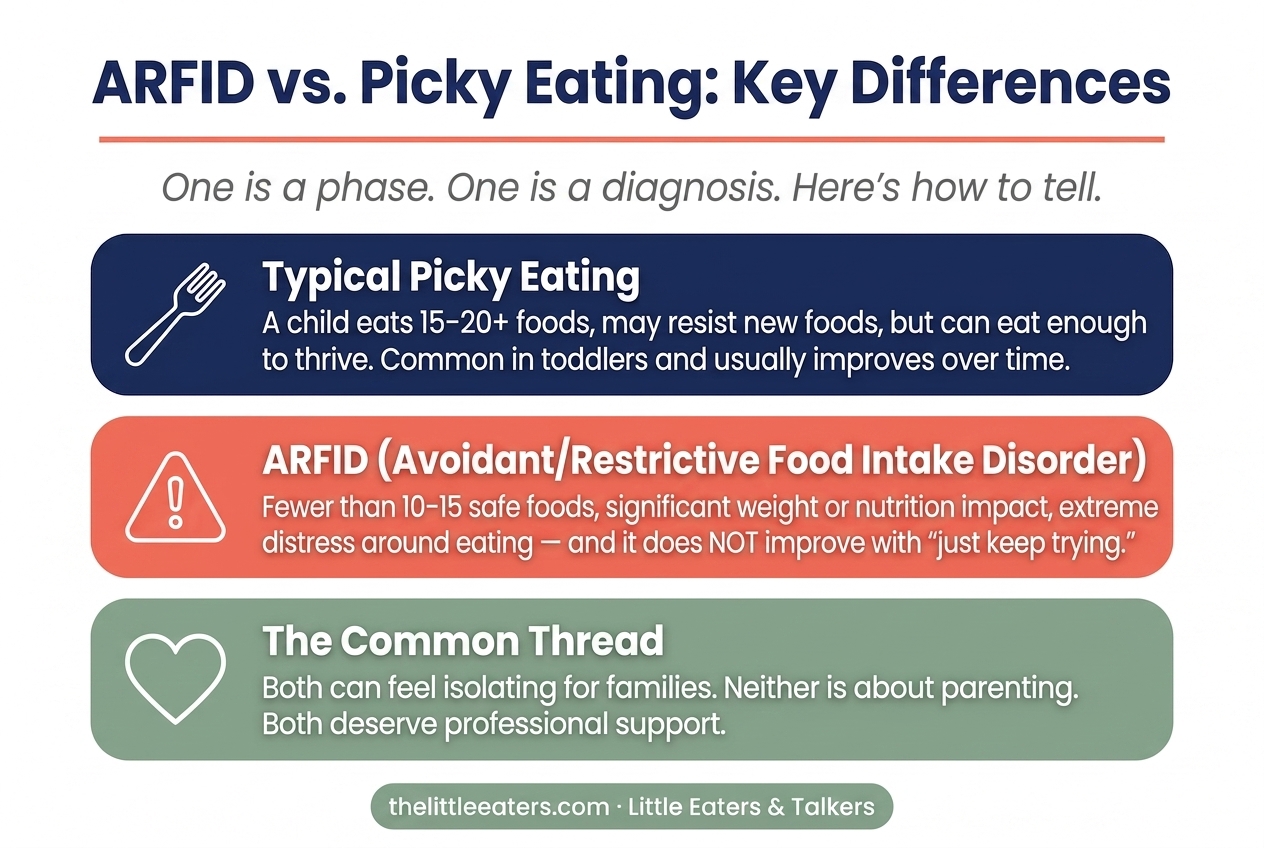
Typical Picky Eating
A child eats fifteen to twenty or more foods, may resist new ones, but takes in enough to thrive. This is common in toddlers and usually improves over time with low pressure and repeated, relaxed exposure.
ARFID, or Avoidant Restrictive Food Intake Disorder
A child has fewer than ten to fifteen safe foods, shows a significant weight or nutrition impact, and experiences extreme distress around eating. Crucially, it does not improve with just keep trying. The harder everyone pushes, the more locked in the avoidance tends to become.
The Common Thread
Both can feel isolating for a family, and neither is about parenting. You did not cause this by offering the wrong food at the wrong age. Both picky eating and ARFID deserve real support, and both get better with the right kind of help.
What Actually Drives ARFID
ARFID usually comes from one of three places, and often a mix of them. Knowing which one is at work for your child is most of what a good evaluation sorts out.
Sensory Sensitivity
For many children, the barrier is sensory. A texture, a smell, a color, or the way two foods touch on a plate can feel genuinely intolerable, not merely unpleasant. These children often accept a narrow band of textures and reject everything outside it, no matter how hungry they are.
A Frightening Experience
Some children develop ARFID after a choking scare, a bout of vomiting, or painful reflux. Their body has linked eating with danger, so avoidance becomes a form of self-protection. This kind often appears more suddenly and can narrow a food list fast.
Low Interest in Eating
A smaller group simply have a very low drive to eat. Food is not frightening or disgusting to them, it just is not interesting, and hunger cues are faint. Meals feel like an interruption to them rather than a reward.
When to Seek Help for ARFID
You do not need a diagnosis in hand to ask for help, and early support genuinely makes a difference. These are the signs that it is time to have your child evaluated rather than wait.
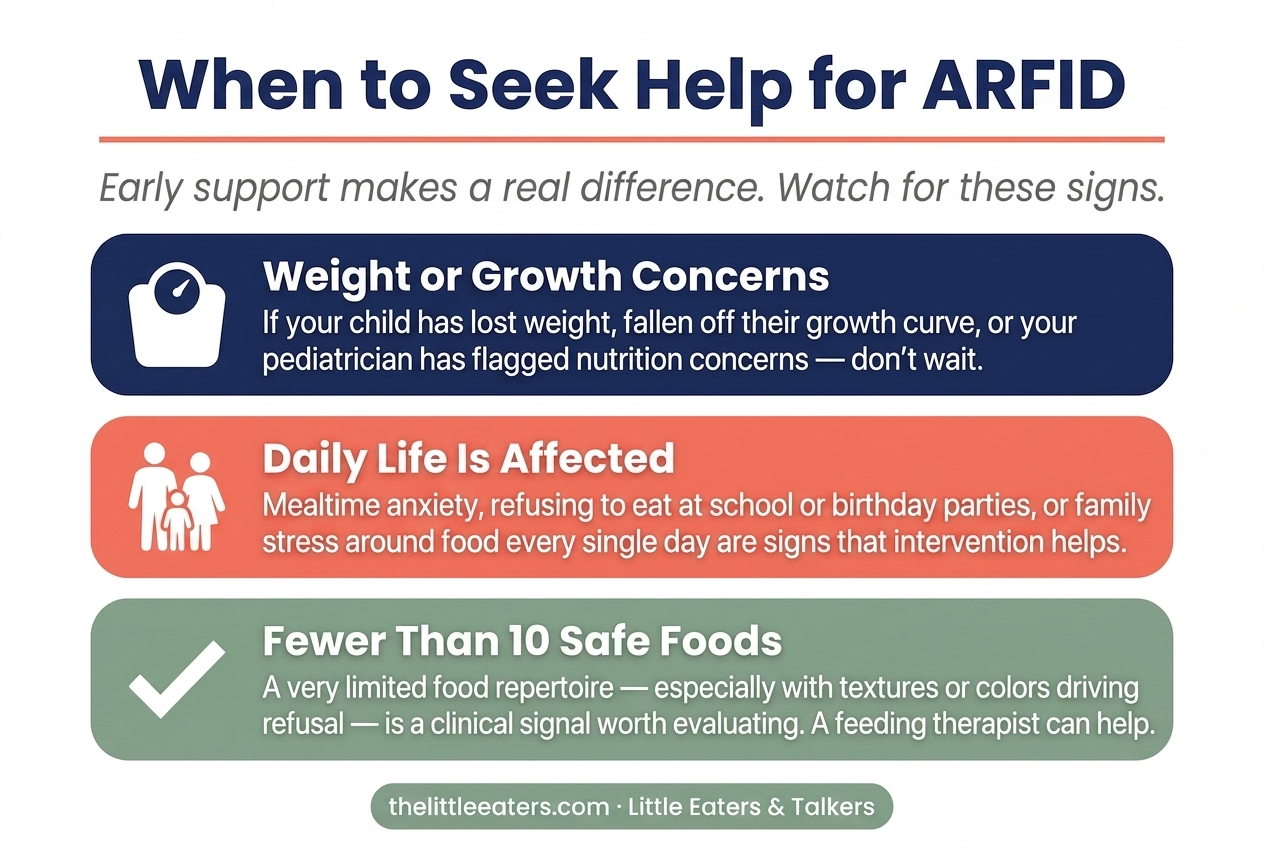
Weight or Growth Concerns
If your child has lost weight, fallen off their growth curve, or your pediatrician has flagged a nutrition concern, do not wait. Growth is usually a late signal, so by the time it shows, the difficulty has often been building for a while.
Daily Life Is Affected
Mealtime anxiety, refusing to eat at school or at birthday parties, or family stress around food every single day are all signs that intervention would help. When eating shapes where your family can go and what your child can join, it has moved past ordinary fussiness.
Fewer Than 10 Safe Foods
A very limited food repertoire, especially when a texture or a color is clearly driving the refusal, is a clinical signal worth evaluating. A feeding therapist can look at why the list is so short and build a plan to widen it safely.
How ARFID Is Treated
The good news is that ARFID responds well to the right support, and the right support is rarely what instinct suggests.
It is not forcing bites, rewarding a clean plate, or making a child sit until food is gone. Those tactics get short-term compliance and long-term fear. Feeding therapy works in the opposite direction. A therapist first figures out what is driving the avoidance, then rebuilds safety around food in small, graded steps, so the child's nervous system learns that eating is not a threat.
For a sensory-driven child, that means careful work up a texture ladder. For a fear-driven child, it means rebuilding trust that food is safe to swallow. For a low-interest child, it means building routine, appetite, and positive associations. The plan follows the cause, which is exactly why the evaluation matters so much.
What You Can Do at Home
While you arrange support, a few things help almost every child and harm none of them.
Keep mealtimes calm and free of pressure, because a relaxed table is the ground everything else is built on. Serve at least one food you know your child accepts at every meal, so there is always a safe option in front of them. Let your child touch, smell, and explore new foods with zero expectation that they eat them, since curiosity comes long before the first bite. And keep your own reactions quiet, whether the meal goes well or not, because a neutral face lowers the stakes for a child who is already anxious.
If you would like a simple structure to track safe foods and gentle exposures, our free resources page has tools that make it easier.
Frequently Asked Questions
Is ARFID the same as being a fussy eater?
No. Fussy eating is common and usually improves with time and low pressure. ARFID involves a very limited diet, real distress, and often an effect on growth or nutrition, and it does not improve with the usual wait-and-see approach. The difference is in the degree of restriction and the level of impact on daily life.
Can a toddler really have ARFID, or is it too early to tell?
ARFID can appear in toddlers, and early signs are worth taking seriously rather than dismissing as a stage. An evaluation does not label a child for life. It simply tells you whether there is an underlying difficulty and what would help, which is far better than guessing.
Will my child grow out of it?
Some children broaden their diets on their own. Children with true ARFID usually do not, because avoidance tends to deepen rather than fade when the underlying cause goes unaddressed. Support shortens the road considerably, and the earlier it starts, the easier the work tends to be.
Do I need a referral to see a feeding therapist?
In Texas you can self-refer for a feeding evaluation, so you do not need to wait for a physician's referral to be seen. If you have concerns, you can reach out directly.
You Know When Something Is More
If you have read this far, the word picky probably stopped fitting a while ago. That instinct deserves to be taken seriously, not waited out.
Our team works with infants and toddlers across Houston and Bellaire on exactly this, the difference between a phase and something that needs support, and what to do about it either way. An evaluation will tell you honestly where your child stands and give you a real plan.
Book a consultation with us and we will take a proper look together.
For more free guidance, visit thelittleeaters.com/FreeDownloads.
Written by The Little Eaters & Talkers Team, a group of pediatric feeding and speech specialists based in Bellaire, TX. We help infants and toddlers navigate feeding challenges, sensory food aversions, and speech development so mealtimes can feel easier for the whole family.