

Feeding Therapy in Houston: What It Is and How to Find the Right Therapist
If your pediatrician told you to look into feeding therapy, you're probably sitting with a lot of questions. What does it actually involve? Is it really necessary? Will my child cooperate? And — where do you even start in a city as big as Houston?
This post answers all of it.
What Is Pediatric Feeding Therapy?
Feeding therapy is specialized support for children who struggle with eating. Not just picky eating in the "won't try new foods" sense — but children who gag at the sight of certain textures, who have dropped to a very small number of safe foods, who panic at mealtimes, who aren't gaining weight the way they should, or whose eating is affecting their daily life and their family's.
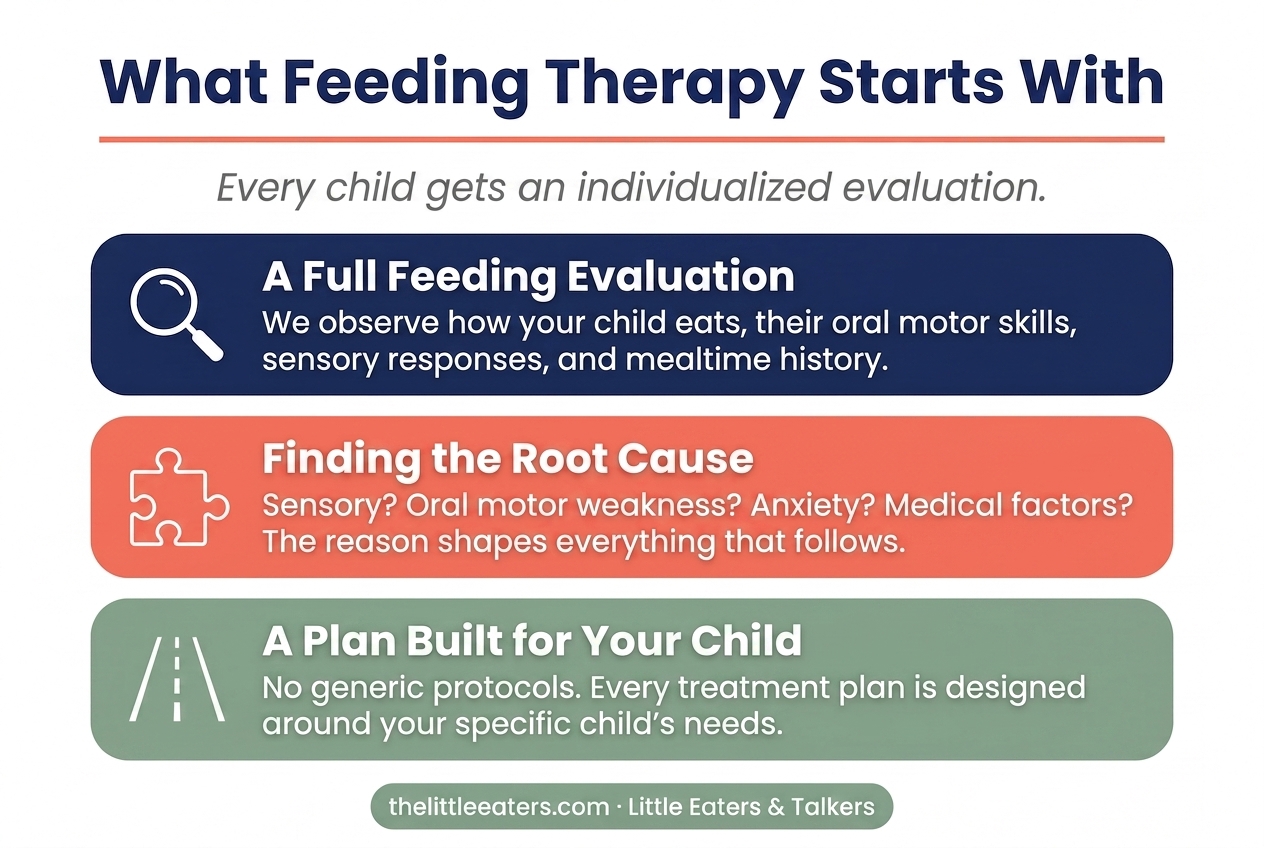
A feeding therapist — usually a Speech-Language Pathologist or Occupational Therapist with specialized training — works to understand WHY a child is struggling and addresses it systematically. The cause matters. Sensory-based food refusal looks different from oral motor weakness, which looks different from anxiety-driven avoidance. A good feeding therapist identifies what's actually driving the behavior before choosing an approach.
What Does Feeding Therapy in Houston Actually Look Like?
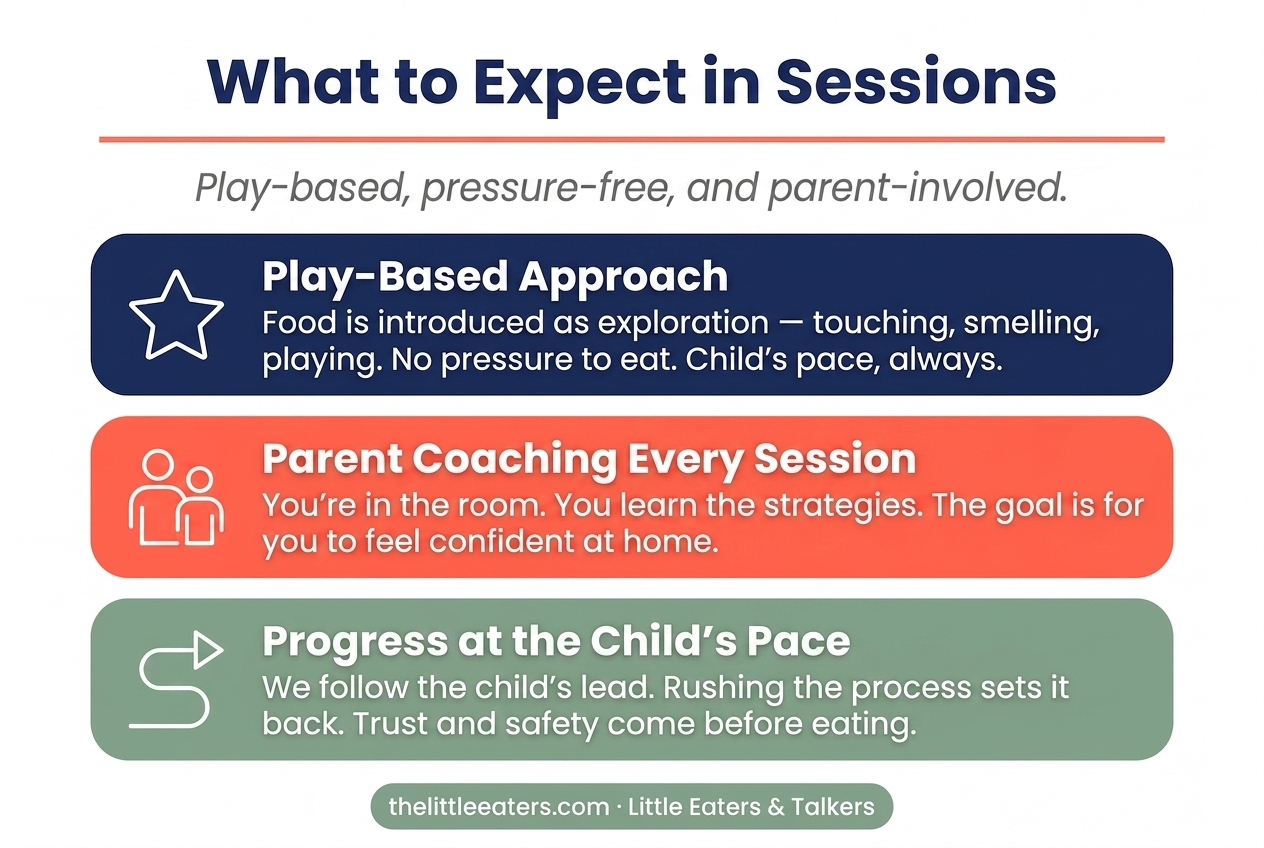
Sessions are typically 30–60 minutes, once a week to start. At Little Eaters & Talkers, we work in our Bellaire clinic using a play-based, pressure-free approach. There's no forcing. No making a child take bites. No reward systems that put food on a pedestal.
Instead we:
Assess the full picture— sensory processing, oral motor skills, history, family dynamics, anxiety levels, and the child's current food repertoire
Build safety around food— before we can expand what a child eats, we have to make them feel safe near food at all
Work through the sensory steps— children learn to tolerate, interact with, smell, touch, and eventually taste foods through a systematic, individualized process
Coach parents— what happens at home is at least as important as what happens in the clinic. We teach parents how to support progress without creating pressure
Most families start to see meaningful changes within 8–12 weeks. Some children need more time, especially those with ARFID, autism-related feeding challenges, or significant oral motor delays.
Who Needs Feeding Therapy?
Feeding therapy is appropriate when a child's eating is affecting their health, nutrition, growth, or quality of life — and when the usual advice ("just keep offering," "they'll eat when they're hungry") isn't working.
Common reasons families come to us in Houston:
Fewer than 20 accepted foods — or fewer than 10
Gagging, retching, or vomiting during meals
Extreme distress or meltdowns around food
Sensory-based texture or color refusal
Baby who is struggling with bottle or breast feeding
Toddler not transitioning to table foods on time
Autism or sensory processing challenges affecting eating
ARFID diagnosis or suspected ARFID
Growth or weight concerns flagged by the pediatrician
If your gut says something is off — it probably is. Parents notice things before pediatricians do. Don't wait for the situation to get more severe before seeking support.
How to Find a Feeding Therapist in Houston
There are a few different types of providers who offer feeding therapy in the Houston area. Here's how to navigate it:
Speech-Language Pathologists (SLPs) with feeding specialization work on the oral motor, sensory, and developmental aspects of eating. This is the right fit for most children with picky eating, sensory aversions, ARFID, or feeding-speech connections.
Occupational Therapists (OTs) with feeding specialization often take a strong sensory integration lens. Good for children with broader sensory processing challenges that affect eating.
Dietitians address nutrition and meal planning but do not treat the behavioral or sensory root causes of feeding refusal. Often a great complement to therapy, not a replacement.
When choosing a provider, ask:
What approach do you use? (Look for pressure-free, play-based, child-led models like SOS or GET Permission)
Do you work with parents as part of sessions?
What's your experience with[sensory feeding / ARFID / autism / oral motor delays]?
At Little Eaters & Talkers, our team is trained in pediatric feeding and speech therapy and works with children from infancy through early childhood at our Bellaire, TX clinic — serving families from Bellaire, West University, River Oaks, Meyerland, Sugar Land, and across the Houston area.
Frequently Asked Questions
How much does feeding therapy cost in Houston?
Costs vary by provider and insurance coverage. Many feeding therapy services are covered under pediatric therapy benefits. We recommend calling your insurance to ask about coverage for "speech therapy" or "occupational therapy" with a feeding diagnosis (ICD-10 code R63.3 — feeding difficulties). Contact us for current rates and insurance questions.
How long does feeding therapy take?
Every child is different. Many children make meaningful progress in 8–12 weeks. Children with ARFID, significant sensory processing challenges, or autism-related feeding difficulties often benefit from longer-term support — 6 months to a year or more.
Can I get my child evaluated without a referral?
Yes. In Texas, you can self-refer to a speech-language pathologist for a feeding evaluation without a physician's referral. That said, having your pediatrician's notes can be helpful for insurance purposes and to give us a full clinical picture.
What age do you work with?
We work with infants, babies, and toddlers — starting as young as a few months old. The earlier feeding challenges are addressed, the better the outcomes.
Ready to Get Support for Your Child?
You don't have to figure this out alone. If you're in the Houston area and your child is struggling with eating, we'd love to hear from you.
Book a consultation with us— our team will review your child's history and help you understand what's going on and what to do next.
Not ready to book yet? Start with our free resources at thelittleeaters.com/FreeDownloads— there's practical information for families navigating feeding challenges at every stage.
Written by The Little Eaters & Talkers Team — a group of pediatric feeding and speech specialists based in Bellaire, TX. We help infants and toddlers navigate feeding challenges, sensory food aversions, and speech development so mealtimes can feel easier for the whole family. Book a consultation →