
First 2 Weeks of Baby Solids: Day-by-Day Guide
Parenting, Baby Feeding, Starting Solids
The First 2 Weeks of Solids: What to Expect Day by Day
Introduction
A mom came into my clinic last month holding her phone up like evidence: fifteen tabs open, six conflicting charts, and a half-eaten spoon of oatmeal drying on her baby's high chair tray. "I don't even know if I'm doing this right," she said. "Nobody tells you what actually happens day to day."
She's not wrong. Most of what's out there is either a single "here's when to start" post or a full-blown meal plan with no room for a baby who just isn't that interested yet. Starting solids isn't one decision — it's about fourteen small, forgettable days that add up to a habit. Here's what I walk families through in my clinic, day by day, so you know what's normal, what to expect, and when to actually pay attention.
Table of Contents
Week Two: What Changes
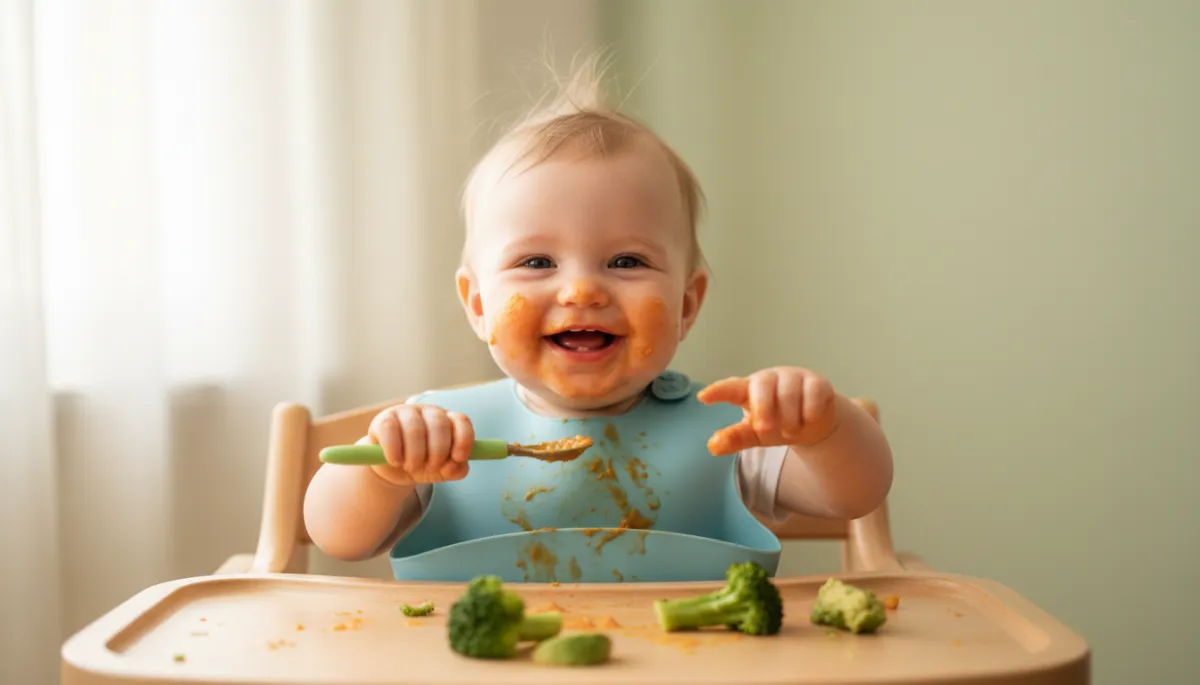
The first several weeks of introducing foods are less about nutrition and more about learning. Your baby is discovering new tastes, textures, and how to move food around their mouth. Most calories will still come from breastmilk or formula. That’s normal—and expected.
💡 Pro Tip: Think of this phase as “food school,” not full meals. Tiny portions, low pressure, lots of smiles.
Before Day 1: How to Know Your Baby Is Actually Ready
Age is a guideline, not a green light. Most full-term babies are ready somewhere around 6 months, but readiness is really about four things happening together:
Sitting with minimal support, without flopping forward or to the side
Steady head and neck control while seated
Reaching for objects (including food) and bringing them to their mouth
Genuine interest in what's on your plate — leaning in, watching intently, mouthing things
If your baby is hitting all four, you're clear to start whenever it fits your family. If one or two are missing, it's fine to wait another week or two. Starting solids isn't a race, and a baby who starts at 6.5 months instead of 6 months isn't behind.
What you can do to help your baby is by practicing highchair sitting or using the Up seat with empty spoons, bowls, chewy tubes and get used to "meal time".
Check out my Linktree for favorite feeding tools
Days 1–3: First Tastes and Messy Experiments
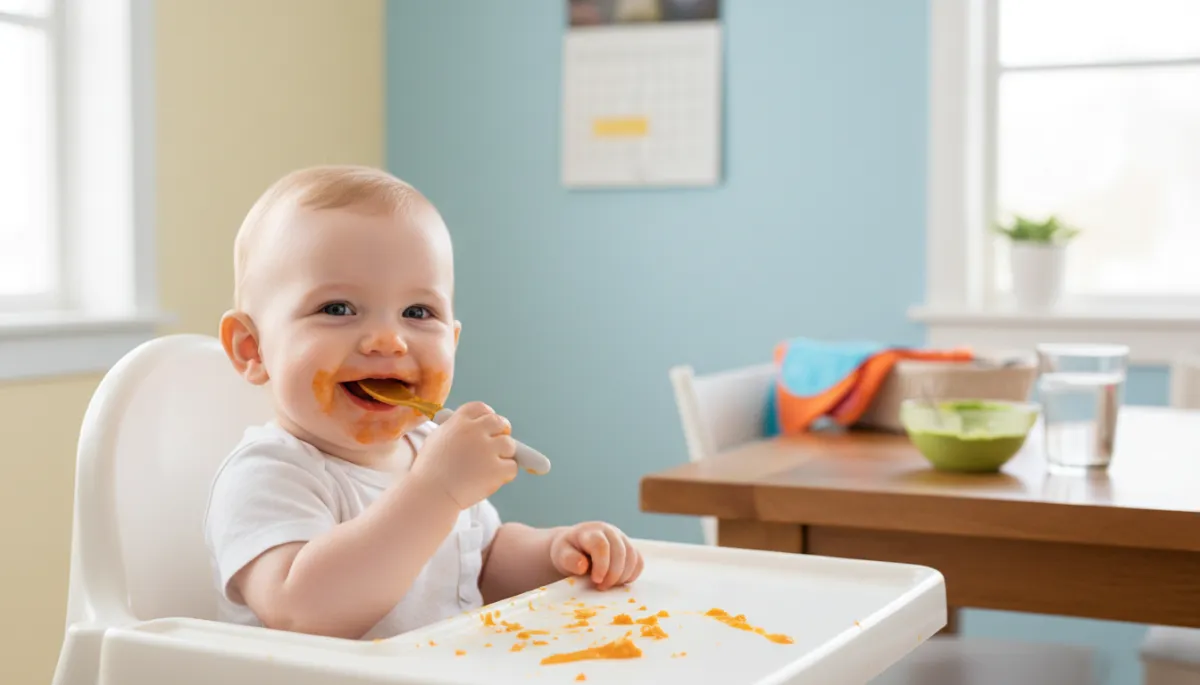
On these first few days, expect just one short “meal” a day. Many babies only manage a few tiny tastes. Some will push food back out with their tongue, look confused, or simply stare at the spoon. All of this is part of normal learning.
Offer 1–2 teaspoons of a food, once a day.
Keep your baby upright and supported in a highchair or on your lap.
Watch for cues: turning away, fussing, or clamping their mouth means they’re done.
Inside the course Helping your baby learn to eat solids, you’ll find step‑by‑step videos that show exactly what those first bites look like—so you can tell the difference between gagging, playing, and genuine discomfort with confidence.
Days 4–7: Building A Rhythm
As you move through the first week, your baby may start to accept a little more and swallow more often. You may seem them put the num num or another flat spoon in their mouth more often or even their fingers to get a lick.
Offer 1–2 sessions a day, keeping them short and relaxed.
You do not have to introduce one food at a time and it is a MYTH about introducing vegetables before fruits. More importantly balance and consistency to teach your baby.
Expect lots of mess: grabbing the spoon, smearing food, and dropping it on the floor are all learning tools.
Gradually increase variety with different colours and flavours to support acceptance later on.
Stools will change—more texture, different colours, sometimes stronger smells. This is usually normal.
We LOVE the Solid Starts App to guide you on specific foods and preparations.
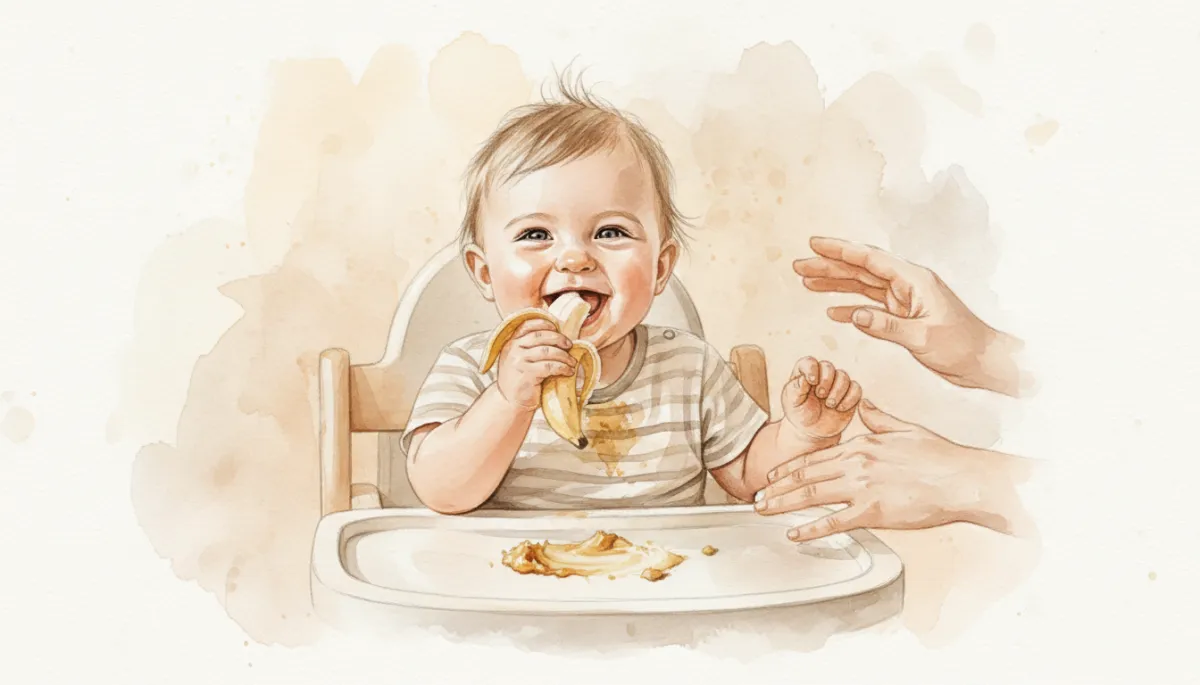
Letting babies touch and play with food builds comfort and confidence at mealtimes.
📌 Key Takeaway: Progress is not measured in how much your baby eats, but in how comfortable and curious they become around food.
Introducing Allergens in the First Two Weeks
This is the part that makes parents the most nervous, and it's worth slowing down on. Current guidance is a real shift from what many of us grew up hearing: instead of delaying foods like peanut, egg, dairy, tree nuts, and seafood until age one or later, pediatric allergists now recommend introducing them around 4–6 months, once your baby is already eating other solids.
Why the change: Research shows early, regular exposure to allergenic foods actually helps build tolerance — and delaying them doesn't protect against allergies the way we once thought.
How to do it safely: Check out our FREE guide. Offer a small amount of one allergen at a time (like a thin layer of smooth peanut butter mixed into oatmeal, or well-cooked scrambled egg), at home, when you can watch your baby for an hour or two afterward. Once a food is tolerated, keep offering it regularly — a few times a week — since consistency matters more than the first exposure.
If your baby has severe eczema or a known food allergy in the family, it's worth talking to your pediatrician about allergy-safe introduction before day one. For everyone else, waiting doesn't add protection — it just delays a food your baby will likely need to eat eventually anyway.
Week Two: What Changes
Around day 8–14, most babies settle into something that finally resembles a routine, even if it's a messy one.
Frequency: You can move to solids once or twice a day, still alongside regular breastmilk or formula feeds, which remain the main source of nutrition until closer to 9–12 months.
Texture: If you started with thin purees, this is often a good window to thicken them slightly or add very soft, dissolvable finger foods like a ripe banana sliver or a well-cooked sweet potato stick — always sized and shaped to reduce choking risk. If you are following a Baby-Led Weaning Routine, the textures you use from day 1 will be soft and mashable.
Variety: By the end of two weeks, most babies have sampled several different foods. You can start offering simple combinations (like sweet potato pancakes) rather than sticking to single ingredients.
Appetite: Some babies start actually eating more than a taste; others are still mostly playing with food at two weeks in. Both are within the range of normal.
How “Helping Your Baby Learn to Eat Solids” Supports You Day by Day
The course Helping your baby learn to eat solids is designed to hold your hand through these first two weeks and beyond. Rather than guessing, you’ll have:
Guidance on what to offer, how much, and what ’s realistic to expect.
Video demonstrations of real babies eating, gagging, refusing, and learning—so you know what’s normal.
Practical safety tips on textures, choking prevention, and allergy introduction, explained in calm, clear language.
How to modify for neurodivergent babies.
💡 Pro Tip: Many parents take the course before starting solids, then rewatch specific lessons on the exact day they need them.
What's Normal vs. What's Not
Gagging is loud, sometimes alarming to watch, and almost always normal — it's your baby's airway protecting itself while they learn to manage new textures. Choking is silent, and involves an inability to cry, cough, or breathe. If you're ever unsure which one you're seeing, it's worth learning the difference before day one, not in the moment.
Other things that are typically fine: eating very little for the first couple of weeks, refusing a food one day and accepting it a week later, spitting food back out repeatedly, or losing interest after a few bites.
Things worth a call to your pediatrician or a feeding specialist: ongoing coughing or watery eyes during meals, arching away from all food consistently, vomiting after most meals, or a true choking event.
Moving Forward With Confidence
The first 2 weeks of solids are a learning curve for both you and your baby. There will be messy trays, tiny victories, and days that don’t go as planned. With the right support, this stage can feel exciting instead of overwhelming.
If you’d like calm, evidence‑based guidance for every step, the course Helping your baby learn to eat solids gives you a clear roadmap—so you can focus less on worrying, and more on enjoying watching your baby discover the world of food.
FAQ
Do I really need to wait 3 days between new foods? Not strictly. Most allergic reactions show up within minutes to a couple of hours, so many pediatric allergists now consider a shorter wait — or introducing foods closer together — reasonable, as long as you're watching for reactions.
How much should my baby actually be eating in the first two weeks? Very little, and that's expected. Breastmilk or formula is still the main source of nutrition. Think of solids in the first couple of weeks as practice, not meals.
When should I introduce allergens like peanut or egg? Current guidance recommends introducing them around 6 months, once your baby is already tolerating other solids, and then keeping them in the rotation regularly rather than a one-time try.
My baby gags a lot — is that a bad sign? Not usually. Gagging is a normal, noisy reflex that helps babies learn to manage new textures. It typically becomes less frequent over the first few weeks. If gagging does not improve or results in vomiting, consider finding a feeding specialist for guidance. Little Eaters & Talkers offers virtual appointments if you live outside of the Houston area.
What if my baby just isn't interested after two weeks? That's still within the range of normal, especially for babies who started right at 6 months. Keep offering without pressure — interest often builds gradually rather than all at once. If your baby is still not interested by 7-8 months, consider finding a feeding specialist to help.
Written by Jean Hawney, M.A. CCC-SLP — Feeding Specialist at Little Eaters & Talkers in Houston, TX. Jean works with infants and toddlers to make mealtimes easier for the whole family. Book a consultation →