

Gagging vs. Choking: Calming the Fear That Freezes You at the Table
Your baby makes a sound. That loud, gulping, red-in-the-face sound, and your whole body goes cold. You freeze, spoon in hand, heart pounding, wondering if this is the moment every parent dreads.
Here is the truth that changes everything at the table: the gagging is not the problem. Your fear of the gagging is. Once you can tell the difference between a gag and a real choke, and calm your own nervous system, mealtimes get dramatically easier.
Gagging and Choking Are Not the Same Thing
They feel identical to a panicked parent, but they are opposites. One is your baby's safety system working perfectly. The other is an emergency. Knowing which is which is the single most useful thing you can learn before starting solids.
How to Tell Them Apart
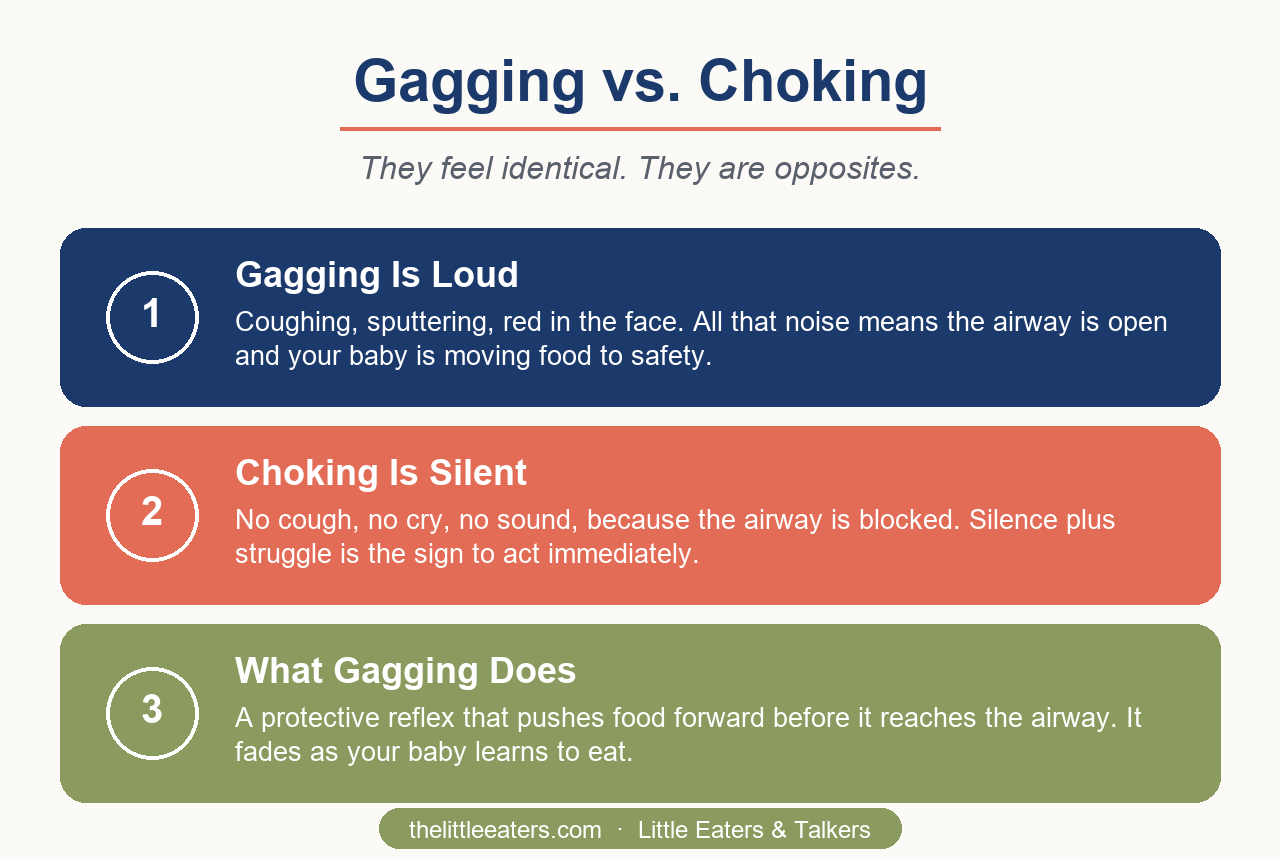
The clearest signal is sound. A gagging baby is loud. A choking baby is silent.
Gagging Is Loud
Gagging is dramatic and noisy. Your baby coughs, sputters, makes retching sounds, and often goes red in the face. All of that noise is the point. It means the airway is open and your baby is actively moving food forward and away from danger. It is uncomfortable to watch, but it is working.
Choking Is Silent
Choking is quiet, and that quiet is what makes it dangerous. A choking baby cannot cough, cry, or make sound, because the airway is blocked. You may see distress, a color change, or a look of panic with no noise. Silence plus struggle is the sign to act immediately.
What Gagging Actually Does
The gag reflex sits far forward on the tongue in babies, which is exactly why new eaters gag so easily. It is a protective early-warning system that pushes food forward before it can ever reach the airway. As your baby practices eating, that reflex gradually moves back and triggers less often. Gagging is not a sign to stop. It is a sign your baby is learning.
The Fear Cycle at the Table
Here is the part almost no one talks about. Your fear does not stay yours. It travels straight to your baby.
When your baby gags and you gasp, tense up, or snatch the food away, your baby reads every bit of it. Their nervous system takes the cue that eating is dangerous. So they get more guarded, more likely to gag, more resistant to new textures, and mealtimes get harder. Your fear, however reasonable, quietly becomes part of the problem.
Breaking that cycle is not about caring less. It is about managing your own reaction so your calm becomes the cue instead.
Calming the Fear
You can absolutely learn to stay steady, and it is a skill worth building before it is tested.
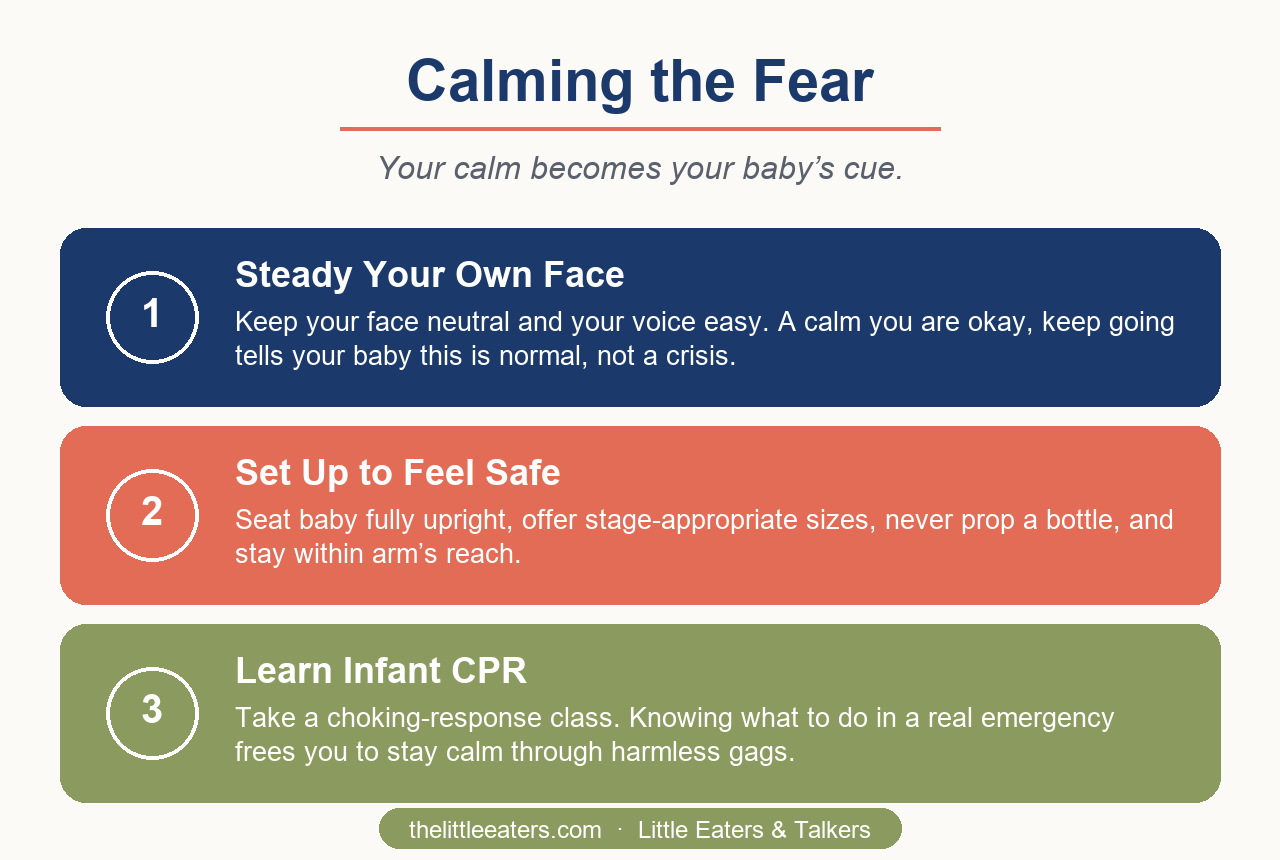
Steady Your Own Face First
When a gag happens, keep your face neutral and your voice calm. A simple, easy phrase like "you're okay, keep going" tells your baby that this is normal and not a crisis. Your unbothered face is the most reassuring thing at the table.
Set Up to Feel Safe
Confidence comes from preparation. Seat your baby fully upright, offer appropriate textures and sizes for their stage, never prop a bottle or leave your baby alone with food, and stay within arm's reach. When the setup is right, you can let the normal gagging happen without bracing for disaster.
Learn Infant CPR
Every parent who is feeding a baby should take an infant CPR and choking-response class. Knowing exactly what to do in the rare real emergency is what frees you to stay calm through the common, harmless gags. Preparation is what turns fear into confidence.
When Gagging Is a Sign of Something More
Frequent gagging in the early weeks of solids is completely normal. But some patterns are worth a closer look.
If your child is well past the early stage and still gags at almost every meal, gags on textures they used to manage, gags to the point of regular vomiting, or seems to be losing foods rather than adding them, that can point to an underlying oral motor or sensory difficulty rather than ordinary new-eater gagging. That is worth an evaluation, not a wait.
Frequently Asked Questions
My baby gags every single meal. Is that normal?
In the first weeks of solids, frequent gagging is very common and usually fades as your baby practices. If it continues well beyond that stage, happens on previously accepted textures, or ends in vomiting, it is worth having a feeding specialist take a look.
Should I put my finger in to help when my baby gags?
No. Reaching into the mouth during a gag can push food backward and turn a harmless gag into a real problem. Let your baby do the work of moving the food forward, and stay ready to act only if it becomes a true, silent choke.
Does baby-led weaning cause more choking?
Research does not show a higher choking risk for baby-led weaning when safe food sizes and shapes are used and your baby is seated upright and supervised. Gagging may look more dramatic at first, but gagging is not choking.
How do I stop panicking at every meal?
Preparation and practice. Learn the gag-versus-choke difference, take an infant CPR class, set the table up safely, and give yourself time. Most parents find their fear settles once they trust both their baby's reflexes and their own readiness.
Your Calm Is the Goal
If fear has been running your mealtimes, you are not doing anything wrong, and you are not alone. The fear is a sign of how much you care. The goal is simply to channel it into preparation rather than panic.
Our team works with families across Houston and Bellaire on starting solids, textures, and the anxiety that so often comes with them. We can help you read what is normal, spot what is not, and feel steady at your own table.
Book a consultation with us and we will help you feed with confidence.
For more free guidance, visit thelittleeaters.com/FreeDownloads.
Written by The Little Eaters & Talkers Team, a group of pediatric feeding and speech specialists based in Bellaire, TX. We help infants and toddlers navigate feeding challenges, sensory food aversions, and speech development so mealtimes can feel easier for the whole family.