

Choosing the Best Nutritional Drink for Kids
Nutrition, Kids Health, Meal Supplements
PediaSure vs Kate Farms vs Store‑Bought Shakes vs Homemade: A Feeding Therapist's Guide to Nutritional Drinks
Nutritional drinks can be a helpful tool for picky eaters, kids who need extra calories, or busy families on the go. But with options ranging from PediaSure and Kate Farms to generic store‑bought shakes and homemade blends, it can be hard to know what’s truly best for your child—and how to use these drinks wisely.
1. How PediaSure and Kate Farms Stack Up Nutritionally
Both PediaSure and Kate Farms are clinically designed pediatric formulas, but they differ in ingredients, calories, and who they’re best suited for.
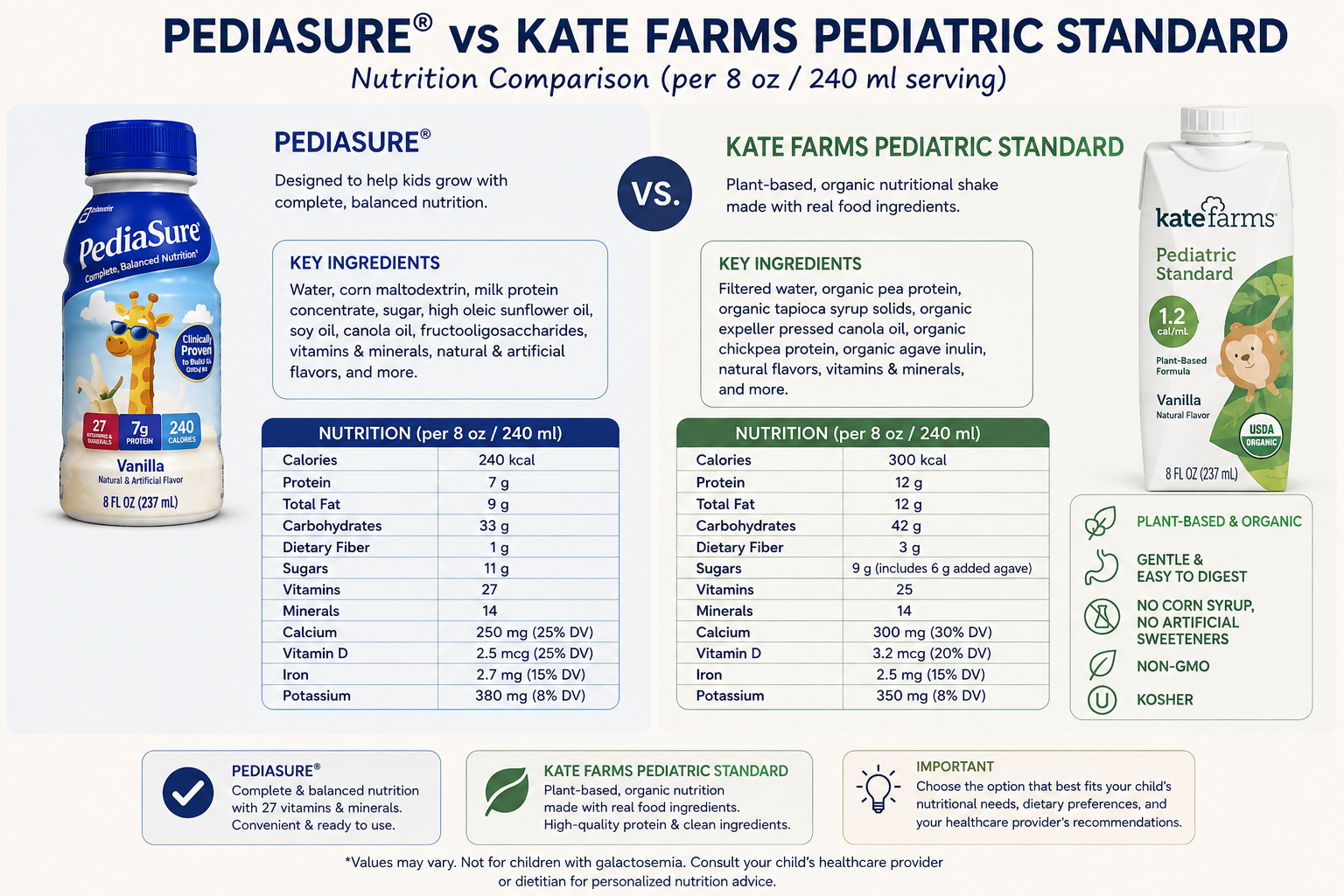
In general, PediaSure Grow & Gain is a moderate‑calorie, dairy‑based drink clinically proven to support growth in undernourished children, while Kate Farms Pediatric Standard 1.2 and Peptide 1.5 are higher‑calorie, plant‑based options with more fiber and allergen‑friendly ingredients.
💡 Quick guide: Think of PediaSure as a traditional, dairy‑based growth supplement and Kate Farms as an organic, plant‑based, allergy‑conscious alternative.
2. Store‑Bought Shakes vs Homemade Nutritional Drinks
Beyond medical‑grade formulas, many families reach for generic store‑bought shakes (like kids’ protein drinks, flavored milks, or smoothie bottles) or make their own at home. Each approach has trade‑offs in nutrition, cost, and control over ingredients.2,3
Store‑bought shakes: Often fortified with vitamins, minerals, and protein, but can be high in added sugars, flavors, and preservatives. You get convenience, but less control over the ingredient list.
Homemade drinks: You choose the ingredients—fruit, milk or plant milks, nut butters, oats, yogurt, seeds—so you can avoid artificial additives and tailor the drink to your child’s needs. They tend to be more budget‑friendly per serving but require time and a blender.
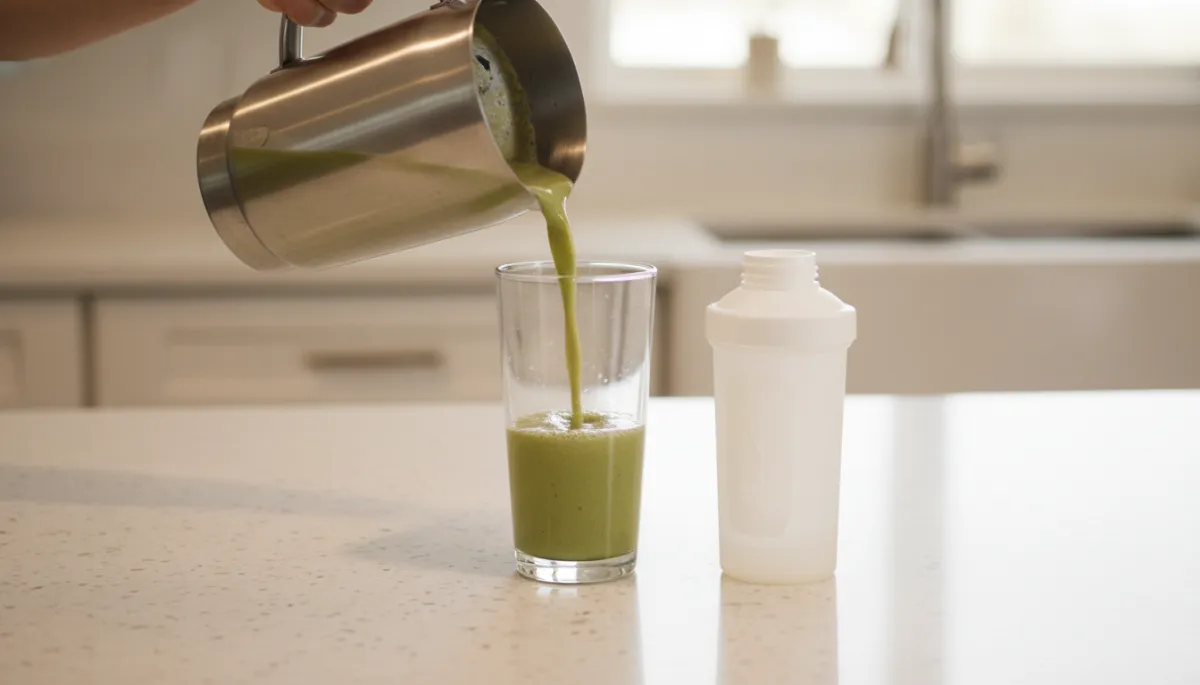
Store shakes win on convenience; homemade blends win on control and customization.
3. Key Differences: Ingredients, Allergies, and When to Use Each
When comparing PediaSure, Kate Farms, generic store shakes, and homemade drinks, three big differences stand out:
Ingredient quality and allergens
PediaSure uses dairy and soy proteins, which work well for many but are off‑limits for kids with milk or soy allergies. Kate Farms formulas are plant‑based and free of the top 9 allergens, making them ideal for sensitive or medically complex kids. Store‑bought shakes vary widely—some are closer to flavored milk than true nutrition drinks—while homemade blends can be fully tailored to avoid specific allergens.Calorie and protein goals
For significant weight gain or high energy needs, higher‑calorie formulas like Kate Farms Peptide 1.5 (375 kcal) or PediaSure Grow & Gain (240 kcal) can be helpful under medical guidance.For kids who need more protein but not many extra calories, PediaSure Protein (14 g protein for only 80 kcal) or a homemade shake with Greek yogurt and milk can be useful.Whole‑food content vs formula precision
Formulas like PediaSure and Kate Farms are engineered to deliver consistent macro‑ and micronutrients in every serving. Homemade drinks and Kate Farms blended meals lean more toward real‑food ingredients, with natural phytonutrients and textures that can be more satisfying, but less precisely measured.
4. Pros and Cons of Each Option
PediaSure (Grow & Gain, Protein, Complete)
Pros: Clinically tested for growth; widely available; includes 27 vitamins and minerals and DHA; easy to track intake; high‑protein option with low calories for older kids or teens.1
Cons: Contains dairy and soy; some versions have added sugars (the classic formula is fairly high in sugar for an 8 ounce serving); relatively low fiber unless you choose a fiber‑enriched variety; ingredients include corn syrup solids and a few synthetic vitamin forms, can be pricey compared with homemade options.
Kate Farms Pediatric Formulas and Blended Meals
Pros: Organic, plant‑based, and free of the top 9 allergens; higher fiber (about 4–5 g); uses MCT oil for easier fat absorption; higher‑calorie options for kids needing more energy; suitable for both oral and tube feeding.1
Cons: Often more expensive; may be harder to find in regular grocery stores; some kids may need time to adjust to plant‑based flavors or textures.
Generic Store‑Bought Shakes
Pros: Extremely convenient; long shelf life; often fortified with vitamins and minerals; no prep required—ideal for travel, school, or busy mornings.2
Cons: Many contain high amounts of added sugar, artificial flavors, and stabilizers; quality varies widely; not always designed specifically for children’s growth needs; easy to overuse as a “meal replacement” instead of supporting a balanced diet.2,4
Homemade Nutritional Drinks
Pros: Maximum control over ingredients; can emphasize whole fruits, vegetables, healthy fats, and quality proteins; easier to limit added sugars and avoid allergens; usually more cost‑effective; can adjust thickness, flavor, and calories to your child’s preferences.3
Cons: Requires time, planning, and equipment; nutrition is less standardized—easy to under‑ or overshoot calories or protein; shorter shelf life; not always appropriate for kids with complex medical needs who require precise formulations.
5. How to Use Nutritional Drinks Wisely
No matter which option you choose, the goal is to use nutritional drinks as a support, not a complete replacement for balanced meals—unless your child’s healthcare team advises otherwise; however, as a feeding therapist who has seen many kids heavily rely on these supplements and stop eating foods, I would do your research. Research on meal replacement shakes highlights both their convenience and the risk of over‑reliance if they crowd out whole foods.4,5
Work with your pediatrician or dietitian. Especially for children who are underweight, have chronic illnesses, feeding difficulties, or food allergies, professional guidance is essential in choosing between PediaSure, Kate Farms, homemade, or other formulas and setting a target number of servings per day.
Use drinks to fill gaps, not replace every meal. Offer them as a snack, with breakfast, or after school rather than always instead of a plate of food. This helps maintain chewing skills, food variety, and enjoyment of family meals.
Watch sugar and portion sizes. For store‑bought shakes, read labels for added sugars and aim for options with more protein and fiber. At home, lean on whole fruits, unsweetened dairy or plant milks, and healthy fats instead of syrups or sweetened yogurts.
Prioritize variety. Rotate between formulas (if approved by your clinician), store‑bought options, and homemade blends so your child is exposed to different flavors, textures, and nutrients.
If it's about pickiness rather than growth, get curious about the "why." A shake can mask a nutrition gap without addressing the sensory, oral-motor, or behavioral reasons a child isn't eating a wider variety in the first place — and that's exactly the kind of pattern a feeding evaluation is built to sort out.
📌 Key takeaway: A “best” drink depends on your child’s medical needs, allergies, growth goals, and your family’s lifestyle. For many families, a mix of one clinically formulated product plus simple homemade smoothies offers both safety and flexibility.
FAQ
Is Kate Farms better than PediaSure? Not universally — "better" depends on the reason your child needs a shake. Kate Farms tends to be a better fit for kids with allergies or GI sensitivities and families who want an organic, plant-based option. PediaSure is more affordable, more widely available, and backed by more clinical history for general use.
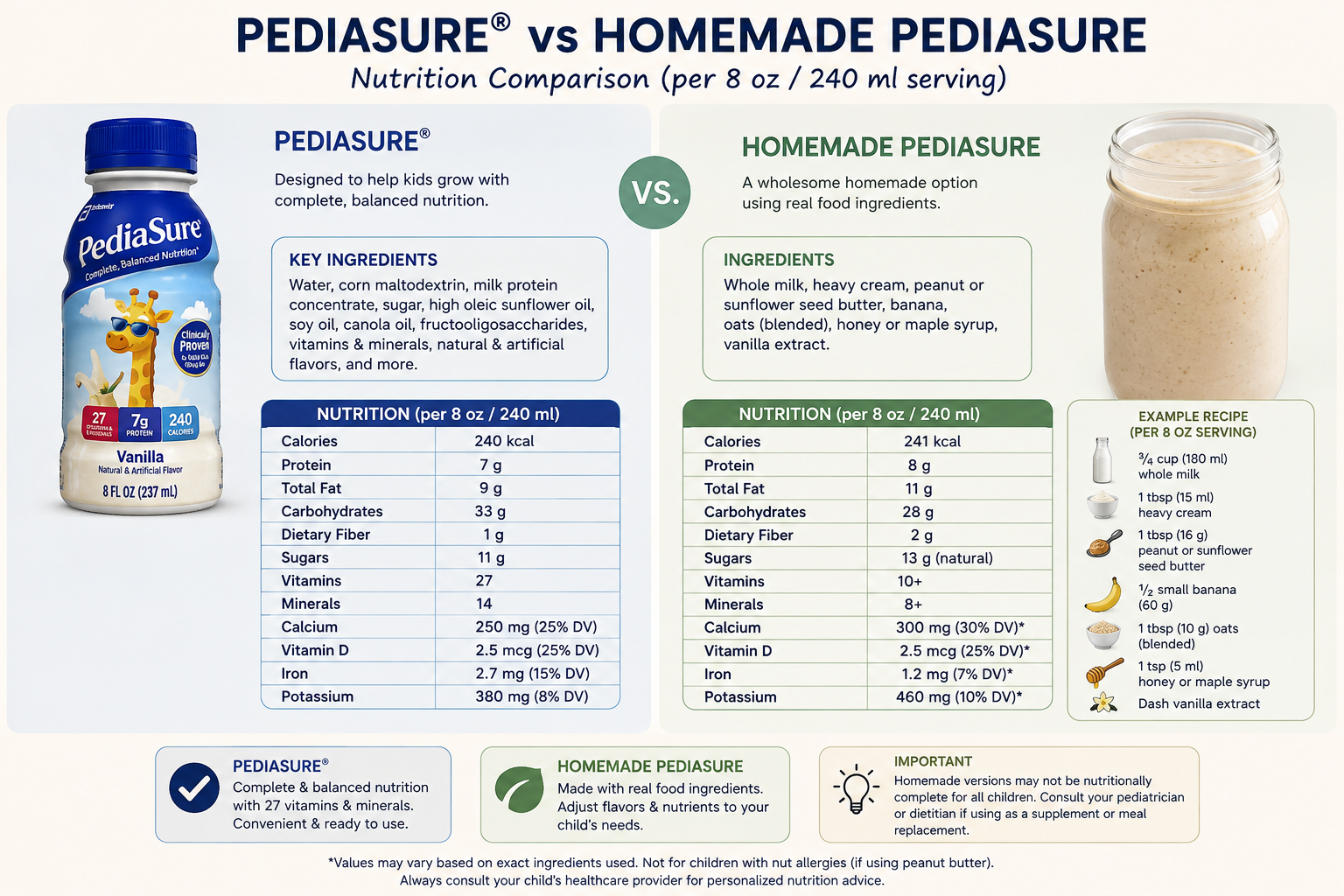
Can I just make my own PediaSure at home? For everyday picky eating, often yes — a homemade shake can cover similar ground with more control over ingredients. For a child with a diagnosed medical feeding need, work with a dietitian first, since commercial formulas are calorie- and nutrient-dosed in a way that's hard to replicate by eye. As a feeding specialist, I always encourage homemade first using a recipe that will meet the caloric and nutritional needs of your child.
How much nutritional shake is too much for a toddler? There's no single universal number, but if a shake is regularly replacing meals rather than supplementing them, or your child seems less interested in food overall, that's worth a conversation with your pediatrician or a feeding specialist.
Are Boost and Orgain as good as prescription formulas like Kate Farms? They serve a different purpose. Boost and Orgain are convenient, everyday options for general nutrition support. Kate Farms and similar clinical formulas are typically recommended when a child has a specific medical or GI need that requires a more targeted formulation.
My toddler refuses all of these — now what? That's common, and it's not a shake problem — it's a "new, unfamiliar drink" problem for a child who may already be cautious with food. Start with a tiny amount alongside a preferred food, and don't force it. If refusal is widespread across foods and drinks, it may be worth a feeding evaluation to understand what's really going on.
Final Thoughts
PediaSure and Kate Farms bring medical‑grade precision, store‑bought shakes bring convenience, and homemade drinks bring customization and whole‑food nutrition. Used thoughtfully—and ideally with input from a pediatric professional—nutritional drinks can be a powerful ally in supporting your child’s growth, energy, and overall health, without replacing the long‑term foundation of varied, family‑style meals.
As a feeding specialist who sees children that have been recommended nutritional shakes, I strongly encourage trialing homemade before store bought to help with variety, nutrition,
1 PediaSure and Kate Farms product data, August 2026 (pediasure.com; katefarms.com).
2 Healthline: Store‑Bought vs. Homemade Smoothies.
3 EatingWell: Homemade Protein Shakes – Benefits and Recipes.
4 Medical News Today: Pros and Cons of Store‑Bought Protein Shakes.
5 Healthline & WebMD: Pros and Cons of Meal Replacement Shakes.
Written by Jean Hawney, M.A. CCC-SLP — Feeding Specialist at Little Eaters & Talkers in Houston, TX. Jean works with infants and toddlers to make mealtimes easier for the whole family. Book a consultation →