

Preference or Sensory Need? How to Tell the Difference
Every parent of a selective eater eventually hits the same fork in the road. Is my child just being picky and choosy, the way lots of kids are? Or is something bigger going on that they genuinely cannot control?
It is one of the most important questions you can ask, because the answer changes what actually helps. A preference and a sensory need can look identical at the table, but they are not the same thing, and they do not respond to the same approach.
Why This Distinction Matters
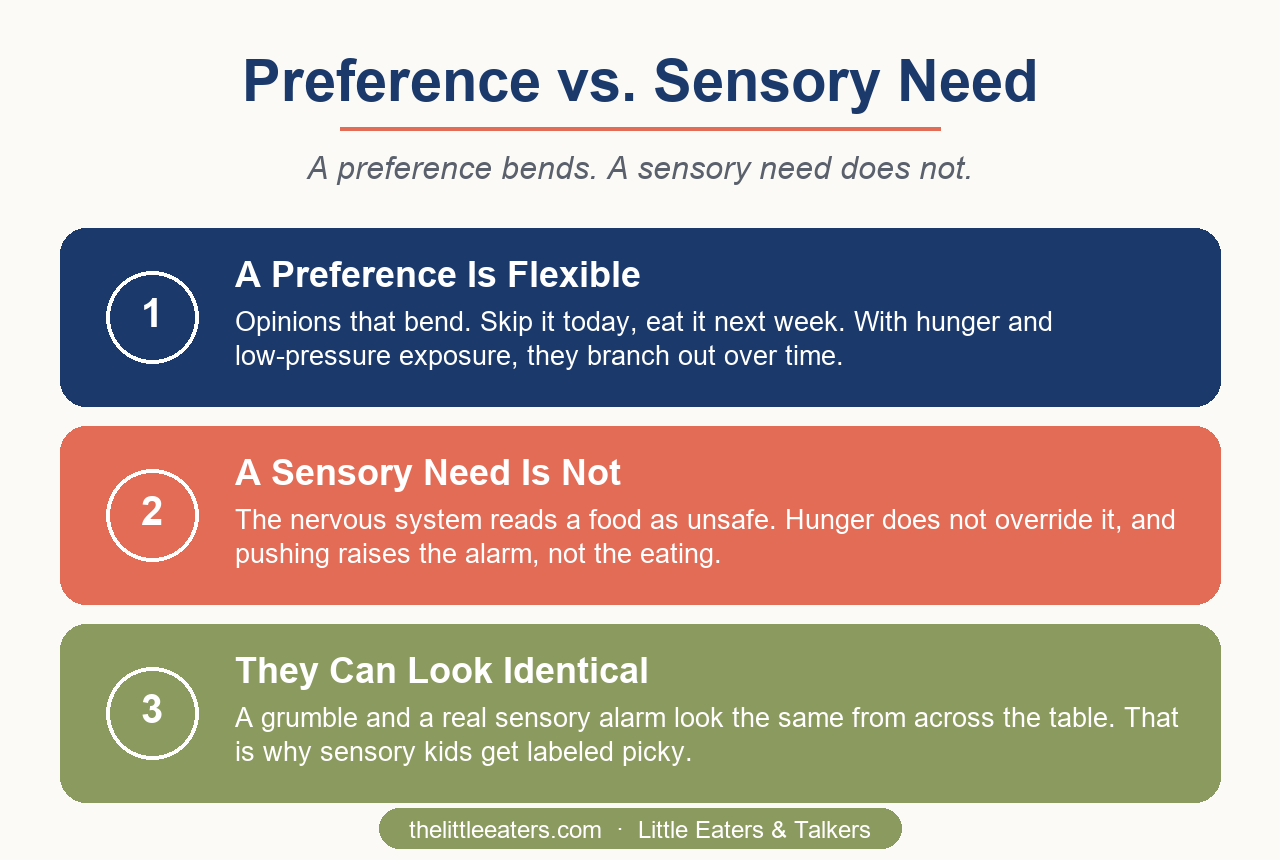
Here is the heart of it. A preference bends. A sensory need does not.
If you treat a real sensory need like a simple preference, the usual advice, keep offering, do not make a separate meal, they will eat when hungry, quietly makes things worse. And if you treat an ordinary preference like a clinical problem, you can add worry and pressure where none was needed. Telling them apart is what points you to the right response.
Preference vs. Sensory Need
The clearest way to understand the difference is to look at how flexible the eating is, and how much distress sits underneath it.
A Preference Is Flexible
A child with a preference has opinions, but those opinions bend. They might grumble about a food, prefer it a certain way, or skip it today and eat it next week. Given enough hunger and low-pressure exposure, they will branch out over time. The refusal is real but movable.
A Sensory Need Is Not Flexible
A child with a sensory need is not holding out for something better. Their nervous system reads certain foods as genuinely unsafe, and hunger does not override that signal. They may go without rather than eat a food that feels wrong, and pushing tends to increase the alarm rather than the eating.
They Can Look Identical
From across the table, a grumble and a genuine sensory alarm can look the same. That is exactly why so many sensory-driven kids get labeled picky and handed advice built for preferences. Looking a little closer at hunger, distress, and pattern is what separates the two.
How to Tell the Difference
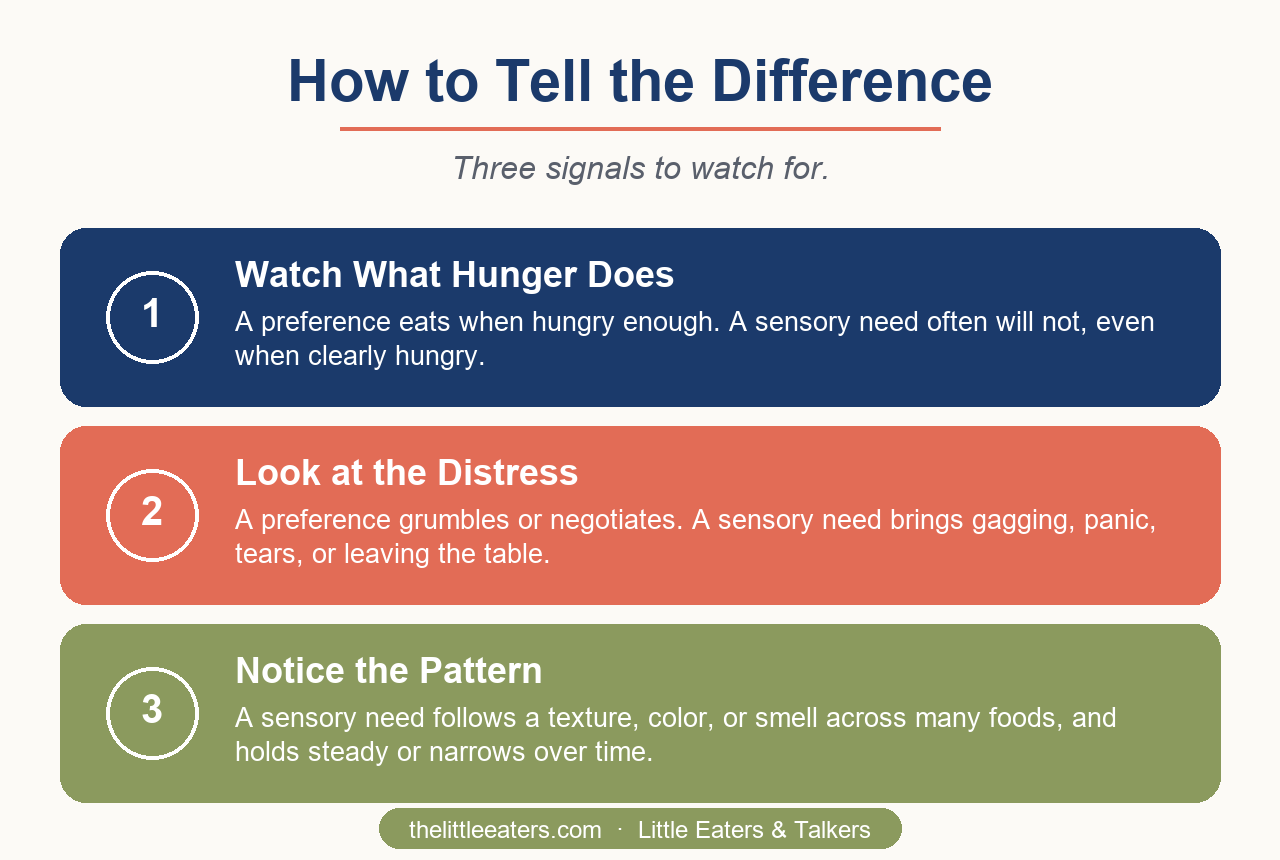
You do not need a diagnosis to start noticing which one you are dealing with. These three signals help.
Watch What Hunger Does
This is the most telling signal. A child with a preference will usually eat a non-preferred food if they are hungry enough and there is nothing else. A child with a sensory need often will not, even when clearly hungry, because hunger cannot outvote a nervous system that feels unsafe.
Look at the Level of Distress
A preference comes with grumbling, negotiating, or a plain no. A sensory need often comes with real distress: gagging at the sight or smell, visible panic, tears, or leaving the table. Genuine fear or a gag response is a sensory signal, not a behavioral one.
Notice the Pattern
Preferences tend to be specific and changeable. Sensory needs tend to follow a texture, a color, a temperature, or a smell across many foods, and to hold steady or narrow over time. A child who refuses everything wet, or everything mixed, is showing a sensory pattern, not a random set of dislikes.
What Each One Needs
Once you know which you are dealing with, the path forward gets clearer.
A preference usually responds well to the classic gentle approach: keep offering without pressure, eat the food yourself, stay relaxed, and give it time. Most preferences soften on their own with a calm table and repeated, low-key exposure.
A sensory need asks for something different. It responds to safety and graded support, not pressure, working up from where the child feels comfortable in small steps, often with the help of the sensory ladder and, when needed, a feeding therapist. Pushing a sensory need the way you would nudge a preference is the single most common mistake, and it usually backfires.
Frequently Asked Questions
Can a child have both a preference and a sensory need?
Yes, often at the same time. A child might have ordinary preferences about some foods and genuine sensory alarms about others. The goal is not to label the whole child, but to read each refusal for what it is.
My pediatrician says it's just a phase. How do I know?
Phases are usually flexible and improve over time. If your child's eating is rigid, distressing, or narrowing rather than widening, and hunger does not move it, that is worth a closer look regardless of reassurance. You can seek a feeding evaluation on your own.
If it's a sensory need, will my child grow out of it?
Some sensory sensitivities ease with age, but a genuine sensory-driven feeding difficulty usually needs support to improve, because avoidance deepens when it goes unaddressed. Earlier support tends to be easier and faster.
Does calling it a sensory need mean something is wrong with my child?
No. Sensory differences are common and are not a flaw. Naming a sensory need simply tells you that your child's refusals come from how their nervous system processes food, which points you toward support that actually fits.
Trust What You Are Seeing
If a quiet part of you has suspected this is more than ordinary pickiness, that instinct is worth taking seriously. You watch your child eat every day, and you are the best-placed person to notice the difference between a grumble and genuine alarm.
Our team works with families across Houston and Bellaire on exactly this question, sorting preference from sensory need and building the right plan for each. An evaluation will give you a clear, honest read and a next step that fits your child.
Book a consultation with us and we will help you tell the difference.
For more free guidance, visit thelittleeaters.com/FreeDownloads.
Written by The Little Eaters & Talkers Team, a group of pediatric feeding and speech specialists based in Bellaire, TX. We help infants and toddlers navigate feeding challenges, sensory food aversions, and speech development so mealtimes can feel easier for the whole family.