

Screens at the Table: Weaning Off the iPad Without Mealtime Falling Apart
🎧 Listen to this article (6 min). The voice is AI-generated, not Jean's own.
Your child eats great with the iPad. The bites go in, the meal ends, nobody cries. After months of feeding battles, that little screen can feel like the only thing that works.
Here is the uncomfortable part. Your child eating well with the iPad is not a sign the problem is solved. It is often a sign of what the real problem is. This is not about shame, because almost every parent has been there. It is about understanding why screens work in the moment and quietly make eating harder over time.
Why Screens "Work" at Meals
Screens work because they distract. A show pulls a child's attention away from the food, and while they are absorbed, the bites go in almost on autopilot.
For a child who finds eating stressful, whether from sensory overwhelm, anxiety, or low appetite, that distraction is a relief. The screen numbs the very feelings that make eating hard, so food goes down without a fight. In the short term, it genuinely looks like a win.
Why Screens Make Feeding Worse
The same distraction that helps today is what keeps a child stuck tomorrow.
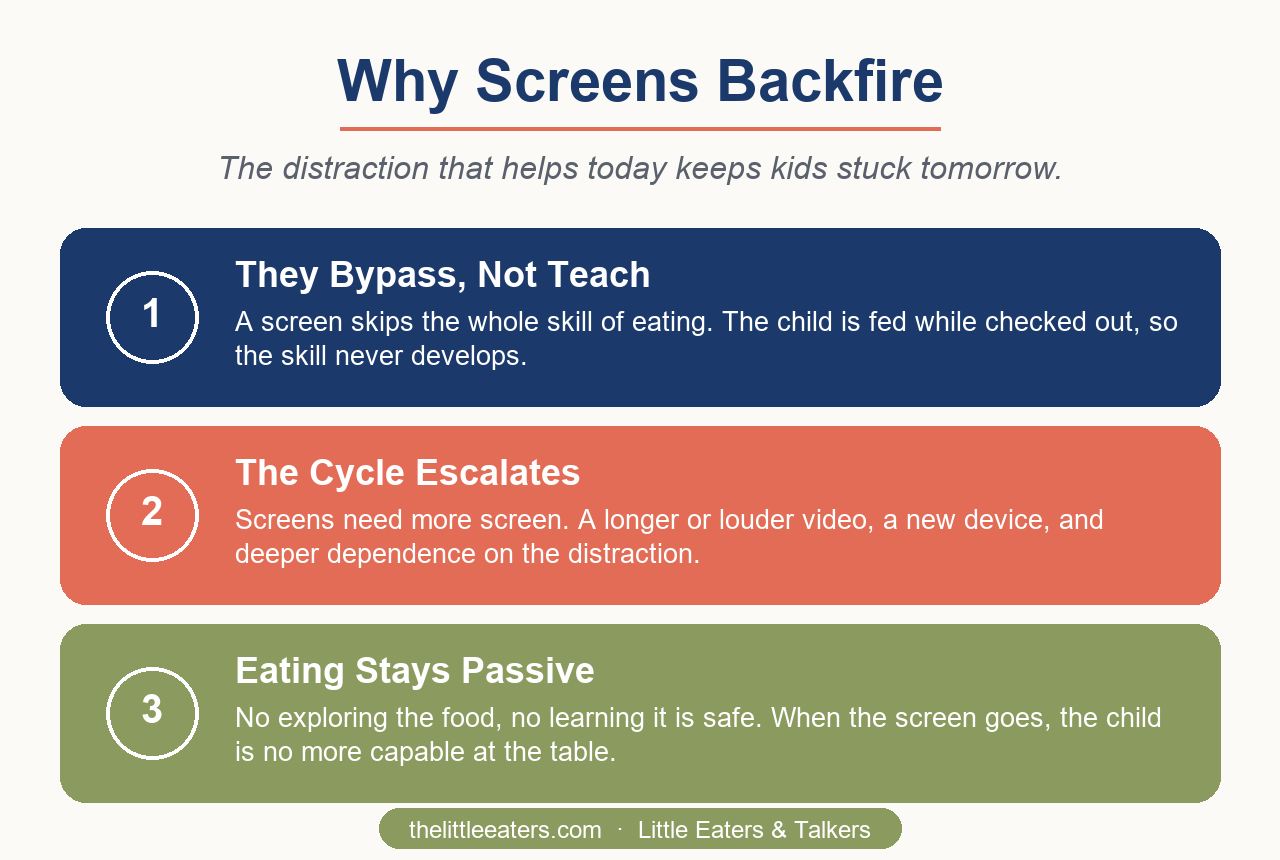
They Bypass, They Do Not Teach
Eating is a skill a child has to learn: noticing hunger, tolerating a food, coordinating the mouth, and staying regulated through a meal. A screen skips all of that. The child is not learning to eat, they are being fed while checked out, so the underlying skill never develops.
The Cycle Escalates
Screens tend to need more screen. A show that worked last month stops holding attention, so it takes a longer video, a louder one, or a new device. Meanwhile the child grows more dependent on the distraction and less able to eat without it. The habit deepens quietly.
Eating Stays Passive
A child eating in front of a screen is a passive participant. They are not exploring the food, not building a relationship with it, not learning that a new food can be safe. When the screen finally goes away, they are often no more capable at the table than they were before, because the practice never happened.
The Screen-Feeding Cycle
It usually starts from a place of pure love and exhaustion. A child will not eat, a parent is worried and worn down, the screen gets them to eat, and the relief is real. So it happens again, and again, until the screen is simply part of how meals work.
None of that makes a parent wrong. It makes a parent human. But the cycle is worth seeing clearly, because a habit that started as a rescue can slowly become the thing standing between your child and independent eating.
How to Wean Off Screens Without Mealtime Falling Apart
You do not have to rip the screen away tomorrow. In fact, going cold turkey usually backfires. Here is the gentler path.
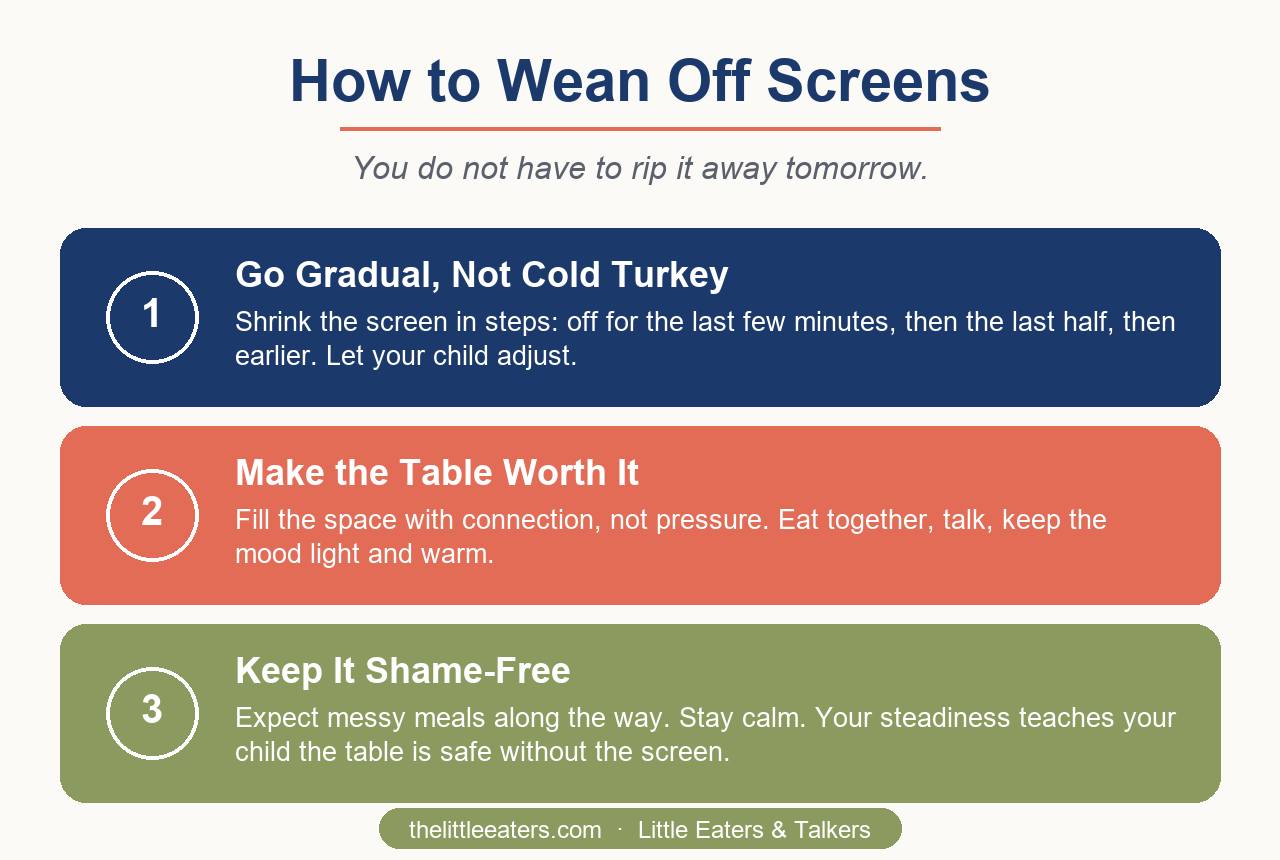
Go Gradual, Not Cold Turkey
Shrink the screen's role in steps. Start by turning it off for the last few minutes of a meal, then the last half, then earlier still. Small, steady reductions let your child adjust without the panic that comes from losing the crutch all at once.
Make the Table Worth Showing Up For
As the screen fades, fill the space with connection instead of pressure. Eat together, talk, let your child help set up, keep the mood light. A warm, low-stress table gives a child a reason to stay present that a demand to eat never will.
Keep It Shame-Free
Weaning takes time, and there will be messy meals along the way. Expect them, stay calm, and do not treat a hard day as failure. Your steadiness is what teaches your child that the table is safe even without the screen.
Frequently Asked Questions
Is it really that bad to use a screen at meals?
An occasional screen at a restaurant or on a hard day is not going to harm your child. The concern is when the screen becomes the only way your child will eat, because then it is masking a feeding difficulty rather than solving one. If you cannot picture a meal without it, that is worth looking at.
My child genuinely will not eat without the iPad. What do I do?
Start small and go slow, and do not do it alone if it feels overwhelming. A child who truly cannot eat without a screen often has an underlying feeding difficulty that the screen has been covering. A feeding evaluation can find what that is and give you a plan that does not rely on distraction.
Will taking the screen away make my child eat even less at first?
Sometimes, briefly, yes. That dip is common and usually temporary as your child learns to eat while present. Going gradual, keeping the table warm, and staying calm all soften the transition.
What can replace the screen at the table?
Connection. Conversation, simple mealtime routines, letting your child help, and eating together as a family all give a child something to be present for. The goal is not to entertain them into eating, it is to make the table a place they want to be.
No Judgment, Just a Next Step
If mealtimes have quietly become you, your child, and a screen, you are not a bad parent. You are a tired one who found something that worked. That is understandable, and it is changeable.
Our team works with families across Houston and Bellaire on exactly this, untangling the habits that build up around a feeding difficulty and rebuilding calm, screen-free meals at a pace that works for your child.
Book a consultation with us and we will help you find the next small step.
For more free guidance, visit thelittleeaters.com/FreeDownloads.
Written by The Little Eaters & Talkers Team, a group of pediatric feeding and speech specialists based in Bellaire, TX. We help infants and toddlers navigate feeding challenges, sensory food aversions, and speech development so mealtimes can feel easier for the whole family.