

The Sensory Steps to Trying a New Food
When we say your child needs to try a new food, most parents picture one thing: the bite. Food goes in the mouth, gets chewed, gets swallowed. Bite or no bite, success or failure.
For a child who finds new foods genuinely hard, that all-or-nothing picture is exactly what keeps them stuck. Trying a food is not one leap. It is a ladder with many rungs, and every rung is real progress, long before a single bite happens.
Why "Just Take a Bite" Doesn't Work
Asking a sensory-sensitive child to jump straight to a bite is like asking someone afraid of water to dive into the deep end. The gap between where they are and what you are asking is simply too big, so they refuse, and everyone feels stuck.
The sensory steps break that gap into small, manageable pieces. Each step lets a child's nervous system get a little more comfortable with a food before the next one is asked. Comfort, not force, is what eventually makes a bite possible.
The Sensory Steps to a New Food
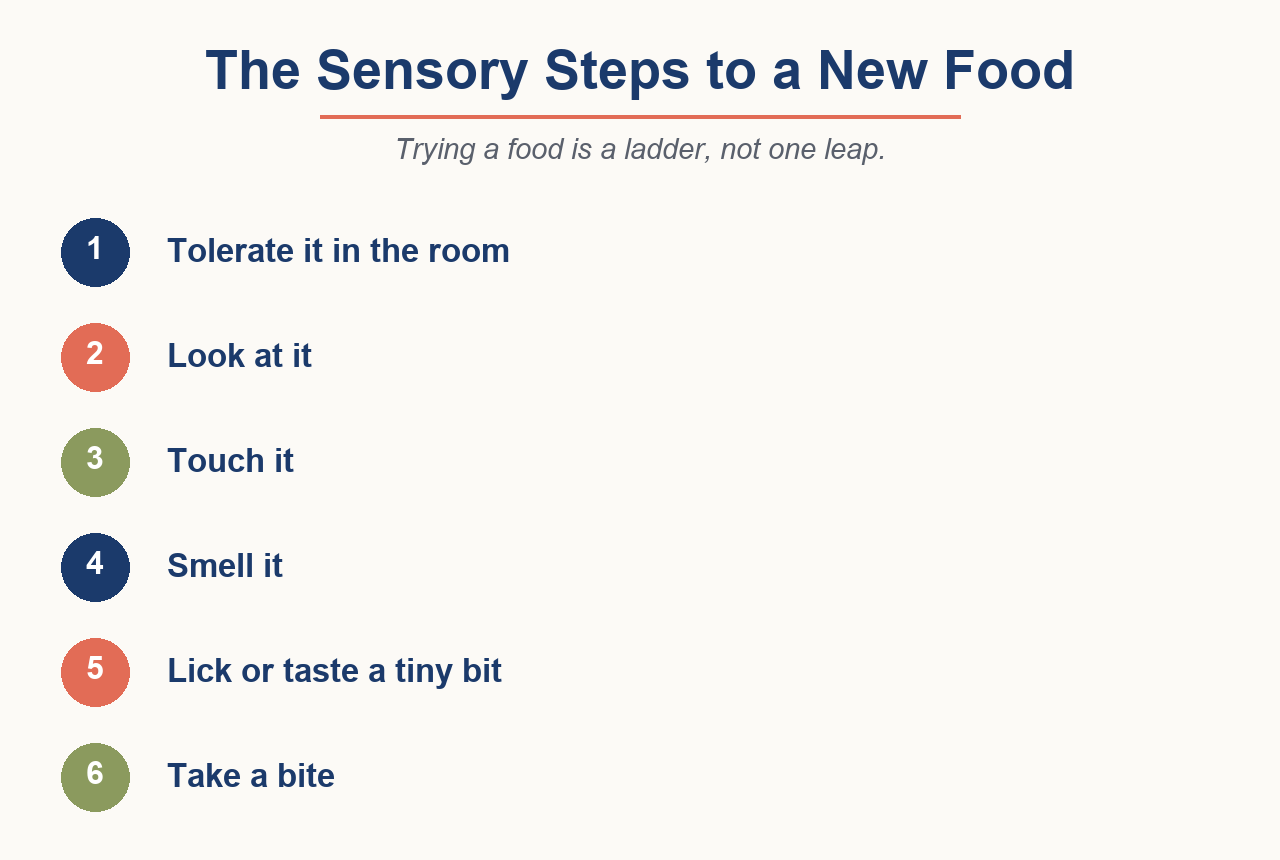
Here is the ladder, from the very first rung to the last. Your child may move quickly through some steps and camp out on others, and that is completely normal.
1. Tolerate It in the Room
The first rung is simply having the food present. On the table, in a serving bowl, on a family member's plate. For some children, a new food merely being in the room is a real step, and letting them get used to that is where it starts.
2. Look at It
Next, the food is on your child's plate or right beside them, and they are willing to look at it without distress. No pressure to touch or eat, just being near it and seeing it up close.
3. Touch It
Touching comes before tasting, always. Poking it, moving it with a fork, picking it up, helping to serve it. Touch teaches the hands and the brain that the food is safe, which the mouth needs to know before it will get involved.
4. Smell It
Smell is a huge part of how we experience food, and it is closely tied to taste. Bringing a food up to smell it, on purpose and without pressure, is a meaningful step toward the mouth.
5. Lick or Taste a Tiny Bit
Before a full bite comes the tiny taste. A lick, a touch to the lips, the smallest nibble. This lets a child gather real information about the flavor with very low risk, and it is often the rung that unlocks the rest.
6. Take a Bite
Only now, after all of that, comes the bite most people started with. And by this point it is a small, safe step rather than a terrifying leap, because the food is already familiar to the eyes, hands, nose, and lips.
How to Use the Ladder at Home
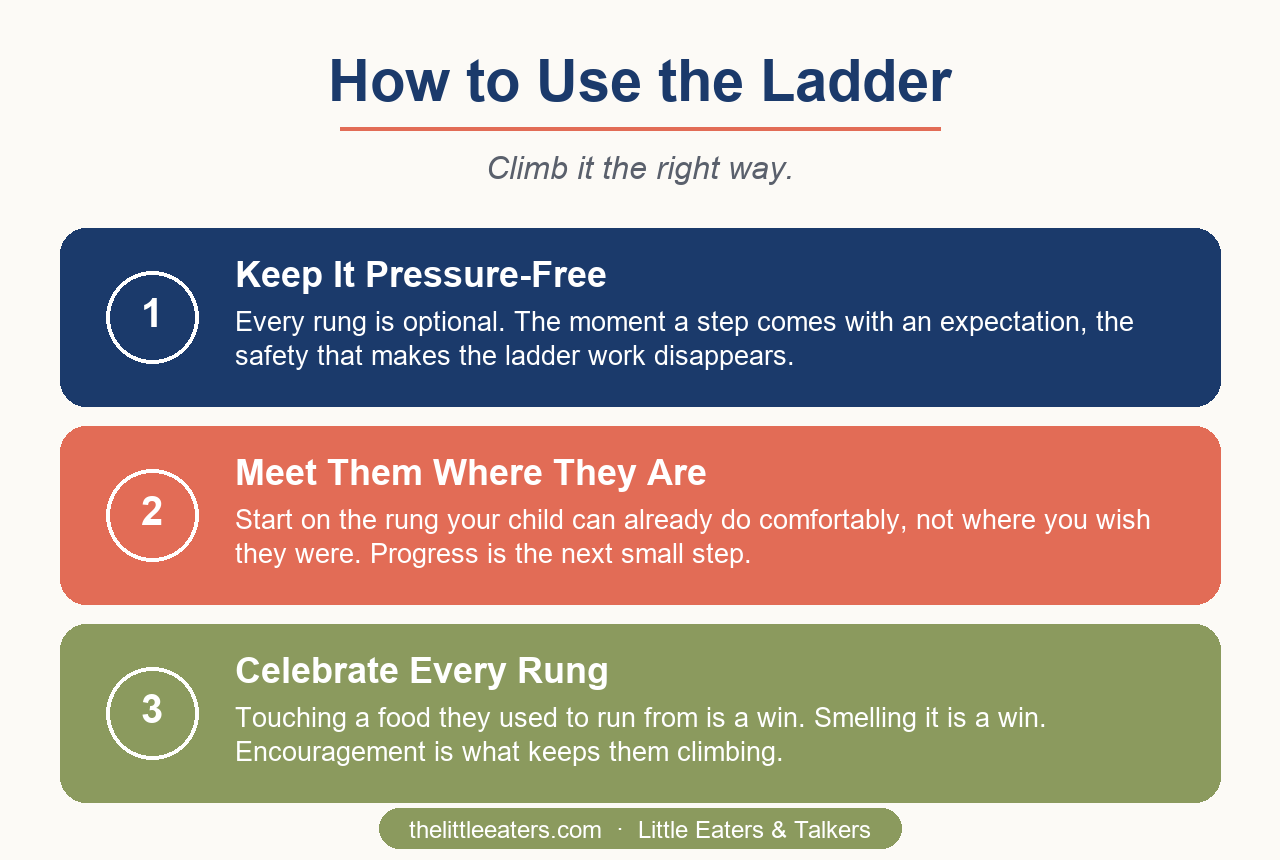
The ladder only works if you climb it the right way. Three rules make all the difference.
Keep It Pressure-Free
Every rung has to be optional. The moment a step comes with an expectation to do the next one, the safety that makes the ladder work disappears. Offer the step, model it yourself, and let your child choose.
Meet Your Child Where They Are
Find the rung your child can already do comfortably and start there, not where you wish they were. Progress means the next small step from their current rung, not a jump to the top.
Celebrate Every Rung
Touching a food they used to run from is a win. Smelling it is a win. Treat each rung as genuine progress, because to your child it is, and that encouragement is what keeps them climbing.
Frequently Asked Questions
How long does it take to get from looking to eating?
It varies enormously by child and by food. Some foods take a few sittings, others take many weeks. The pace is set by your child's comfort, and rushing the ladder usually knocks them back down it.
My child will touch food but never tastes it. What do I do?
Stay on the touching and smelling rungs longer, and add playful, low-pressure exposure. Sometimes the gap between touch and taste needs more time and smaller steps, like touching to the lips before any lick. If it stays stuck for a long time, a feeding therapist can help find the missing rung.
Should I reward my child for each step?
Praise and warmth, yes. Formal rewards and bribes, no, because they add pressure and shift the focus from the food to the prize. Genuine, low-key encouragement works better and keeps the table calm.
Is this the same as food chaining?
They work beautifully together but are not the same. The sensory steps move a child closer to one specific food, while food chaining bridges from foods they already eat to new, similar ones. Many families use both at once.
Every Rung Counts
If your child touched a new food today and never tasted it, that was not a failure. That was a rung climbed, and it matters more than it looks.
Our team works with families across Houston and Bellaire on exactly this, turning the terrifying leap of a new food into a ladder your child can actually climb. We can show you which rung to start on and how to move up it without the battles.
Book a consultation with us and we will map the ladder for your child.
For more free guidance, visit thelittleeaters.com/FreeDownloads.
Written by The Little Eaters & Talkers Team, a group of pediatric feeding and speech specialists based in Bellaire, TX. We help infants and toddlers navigate feeding challenges, sensory food aversions, and speech development so mealtimes can feel easier for the whole family.