
The Ultimate Guide to Feeding Your Baby: Purees, Baby-Led Weaning & More!
Introducing solids is an exciting milestone—but with so much advice out there, how do you decide what’s best for your baby? Should you start with spoon-fed purees, go straight to finger foods with baby-led weaning (BLW), or try a mix of both? Let’s break it all down so you can make the best choice for your little one.
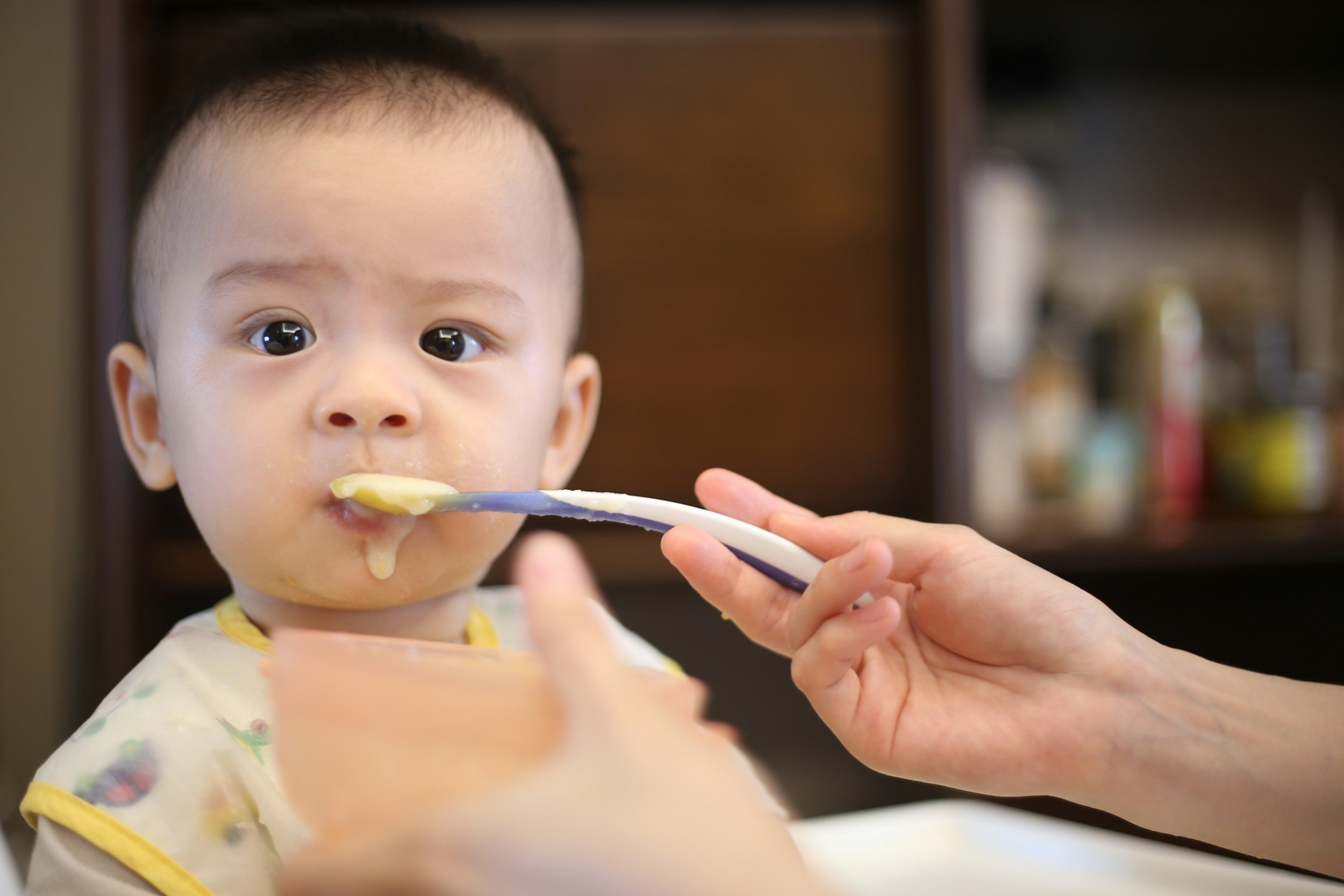 Spoon feeding purees [/caption]
When is Your Baby Ready for Solids?
Before deciding how to feed, let’s make sure your baby is ready! Signs of readiness include:
✅ Sitting up with good head control
✅ Showing interest in food (watching you eat, reaching for food)
✅ Loss of the tongue-thrust reflex (not automatically pushing food out)
✅ Bringing objects to their mouth
If your baby is showing these signs (usually around 6 months), it’s time to start solids!
Feeding Approaches: What Are Your Options?
Option 1: Traditional Spoon-Fed Purees
This method involves offering smooth, mashed, or blended foods from a spoon and gradually increasing texture over time.
✔️ Pros:
Easier to control portions and textures
Can be helpful for babies with medical concerns (e.g., prematurity, developmental delays)
Less mess (sometimes!)
❌ Cons:
Can take longer for babies to develop self-feeding skills
Parents may need to transition from purees to table foods over time
💡 Best for: Parents who prefer a more controlled approach or want to introduce solids gradually.
 Baby is in charge of what goes in her mouth [/caption]
Option 2: Baby-Led Weaning (BLW)
BLW skips spoon-feeding and lets babies self-feed soft, graspable finger foods right from the start.
✔️ Pros:
Encourages independence and self-regulation
Helps babies develop oral-motor and fine motor skills
Babies learn to eat a variety of textures early on
❌ Cons:
More mess (hello, food-covered floors!)
Requires careful food prep to avoid choking hazards
Some parents worry about how much baby is actually eating
💡 Best for: Families who want to promote self-feeding and are comfortable with a messier process.
Option 3: A Combination Approach
Many families find success combining purees and finger foods. You might start with spoon-fed purees while also offering soft finger foods alongside.
✔️ Pros:
Provides the benefits of both methods
Allows flexibility based on baby’s comfort level
Helps parents ease into self-feeding gradually
❌ Cons:
Can still be messy (but that’s part of the fun!)
Requires parents to be patient with baby’s learning process
💡 Best for: Parents who want the best of both worlds!

Whether you choose purees, BLW, or a mix of both, the goal is the same: helping your baby explore food and build a healthy relationship with eating! The takeaway is to be RESPONSIVE TO YOUR BABY’S CUES.
Need more support? I offer workshops and consultations to help parents navigate this exciting stage! Reach out anytime—I’d love to help!
👉 Want more feeding tips? Subscribe to my newsletter!
👉 Want 1:1 Coaching in Person (Houston) or Virtually? Book an appointment on our website with Little Eaters & Talkers. Our team would love to help you and your family.