

How to Keep a Picky Eater Hydrated (Especially in Summer)
Most parents know to watch for dehydration in summer. But here's what nobody talks about: picky eaters are at a significantly higher risk — because many of them refuse drinks just as strongly as they refuse food.
Your child won't drink water. They won't drink juice. They won't drink milk unless it's a specific brand in a specific cup. And now it's 95 degrees in Houston and you have no idea if they're getting enough fluids.
This is more common than you think. And there are real, practical strategies that work — even for the most selective drinkers.
Why Picky Eaters Struggle with Drinks Too
Sensory-based food refusal doesn't stop at solid food. Many children with texture sensitivities also have strong reactions to the temperature, taste, and even the sensation of drinking. Water can feel "too plain. "Juice can be "too strong." Milk in the wrong cup triggers a meltdown.
This isn't defiance. It's the same sensory system that drives food refusal — just applied to liquids. And in summer, when fluid needs go up and appetite goes down, the combination creates a real dehydration risk.
The good news is that fluids don't have to come from a cup. Food counts too — and that's where picky eaters often have more flexibility than you'd expect.
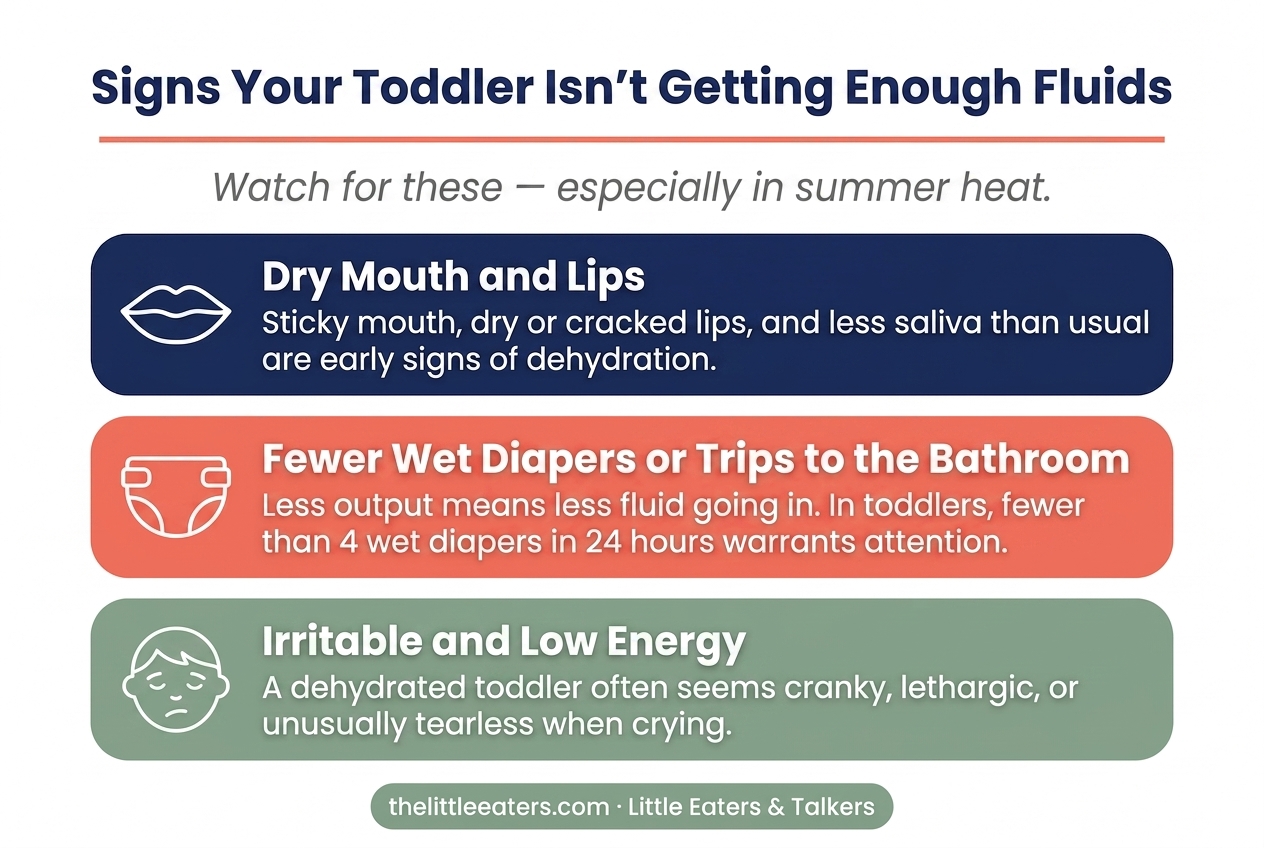
Signs Your Toddler Isn't Getting Enough Fluids
These are the three signs to watch most closely, especially during Houston summers:
Dry mouth and lips. A sticky mouth, dry or cracked lips, and less saliva than usual are early dehydration signals. If your child's lips look chapped and they haven't been outside in the wind, that's worth paying attention to.
Fewer wet diapers or trips to the bathroom. Less output means less fluid going in. In toddlers, fewer than 4 wet diapers in a 24-hour period warrants attention. For older children out of diapers, notice if bathroom trips drop significantly from the normal pattern.
Irritable and low energy. A dehydrated toddler often seems unusually cranky, lethargic, or tearless when crying. If your child is melting down more than usual and you can't pin it to sleep or hunger, dehydration may be a factor.
If you notice any of these signs alongside a toddler who is already a selective eater or drinker, don't wait — contact your pediatrician.
Getting Fluids In When They Won't Drink
The most effective strategy is often to stop fighting about the cup and start getting creative about the food.
A few approaches that work for picky eaters:
Try different cups and temperatures. Some children who refuse room-temperature water in an open cup will happily drink ice-cold water from a straw. Others prefer a specific color of bottle or a cup with handles. Sensory preferences around cups are real — work with them, not against them.
Make water slightly interesting. A thin slice of cucumber or a squeeze of fruit in water changes the taste just enough for some kids without adding much sugar. For children with flavor sensitivities, go slowly —even a hint of flavor can be too much at first.
Use a straw. Straw drinking activates different oral motor patterns than cup drinking. Many children who gag on open cups drink more comfortably from a straw.
Offer fluids before meals, not just at them. Some picky eaters feel overwhelmed at the table and drink less there. A small cup of water 30 minutes before a meal can contribute to daily intake without the pressure.
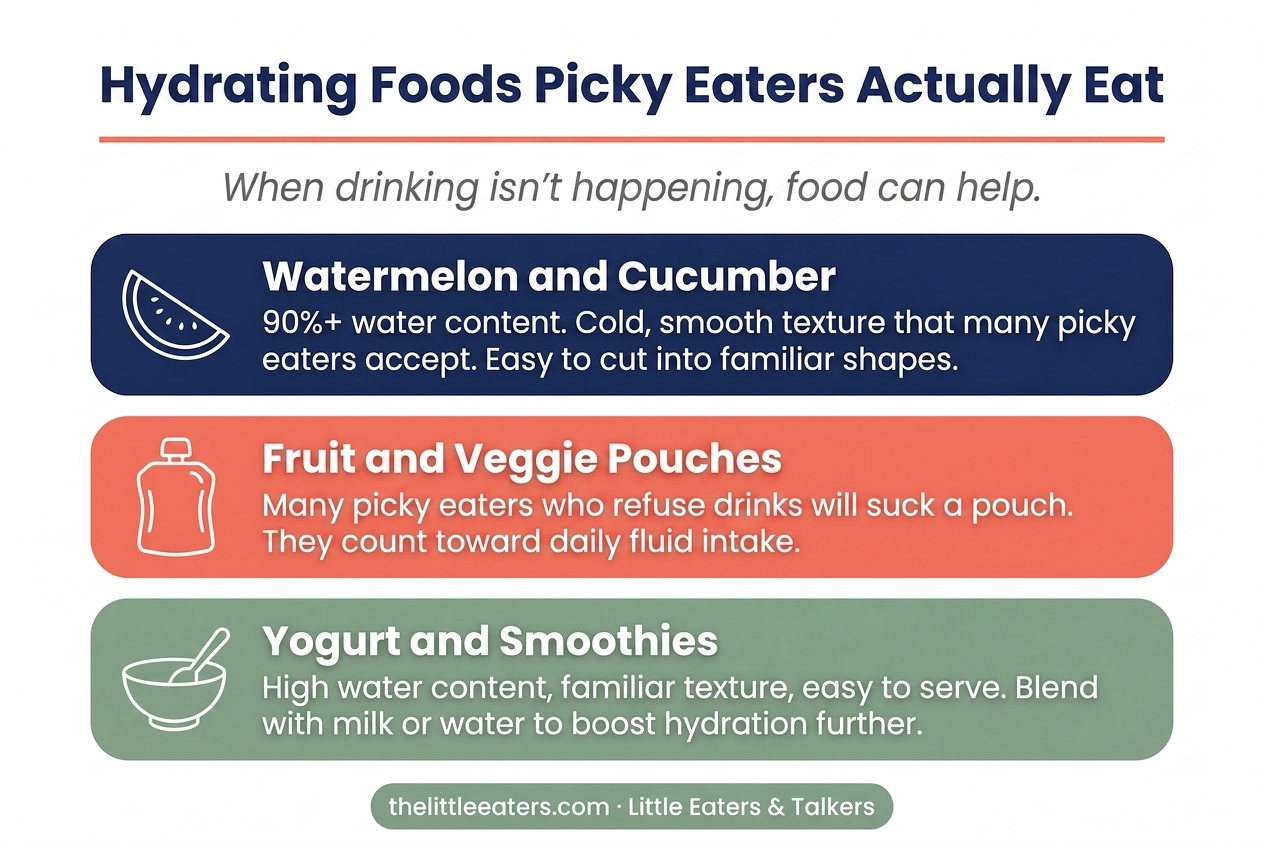
Hydrating Foods Picky Eaters Actually Eat
When drinking isn't happening, food can make up a meaningful portion of daily fluid intake. Here are three categories that tend to work well even for selective eaters:
Watermelon and cucumber. Both are 90%+ water. They're cold, smooth in texture, and easy to cut into familiar shapes. Many picky eaters who reject strong flavors accept these because they're mild and consistent. In Houston summer heat, cold water melon is often a natural hit.
Fruit and veggie pouches. Many children who refuse drinks will readily suck a pouch. They count toward daily fluid intake, they come in familiar flavors, and they require no negotiation at the table. Keep a fewin the fridge during summer.
Yogurt and smoothies. Both have high water content and familiar textures for many picky eaters. A simple smoothie blended with milk or water and a fruit your child already accepts can meaningfully boost hydration with out introducing any thing new.
The goal isn't to trick your child — it's to meet their needs within what they're currently able to eat and drink, while continuing to work one expanding that range overtime.
When to Talk to Someone
Dehydration in toddlers can escalate quickly. If your child shows signs of moderate to severe dehydration — sunken eyes, no tears when crying, very dark urine, extreme lethargy, or a sunken soft spot in infants — seek medical care immediately.
For ongoing concerns about a child who consistently refuses liquids or has a very limited repertoire of accepted foods and drinks, a feeding evaluation is the right next step. Selective drinking is something feeding therapy directly addresses — it's not something families have to navigate alone.
Frequently Asked Questions
How much water does a toddler need per day?
Generally 1–4 cups (8–32 oz) of total fluid per day for children ages 1–3, including fluids from food. In Houston summer heat, aim for the higher end. Remember that milk and food moisture count toward this total.
My toddler only drinks milk. Is that enough?
Milk is hydrating and nutritious, but relying on it exclusively — especially in high volumes — can crowd out solid food intake and lead to iron deficiency. If your toddler is drinking more than 16–20 oz of milk per day and eating very little, that's worth discussing with your pediatrician.
Can a picky eater be helped to drink more?
Yes. Selective drinking often responds to the same sensory-based, pressure-free approaches used for picky eating. A feeding therapist can assess what's driving the refusal and build a plan to expand accepted drinks alongside accepted foods.
Are electrolyte drinks okay for toddlers?
In cases of illness or significant dehydration, pediatric electrolyte solutions (like Pedialyte) can help. Regular sports drinks have too much sugar and sodium for toddlers. Ask your pediatrician before using any electrolyte product regularly.
You Don't Have to Guess Your Way Through This
Keeping a picky eater hydrated in a Houston summer is genuinely hard. If your child is a selective eater or drinker and you're worried about their fluid intake — or their nutrition more broadly — that's exactly what we help with.
Book a consultation with us and let's talk through what's happening and what can actually help.
And for more free guidance, visit thelittleeaters.com/FreeDownloads— there's practical support there for families navigating picky eating at every stage.
Written by The Little Eaters & Talkers Team — a group of pediatric feeding and speech specialists based in Bellaire, TX. We help infants and toddlers navigate feeding challenges, sensory food aversions, and speech development so mealtimes can feel easier for the whole family. Book a consultation →