

What Feeding Therapy Actually Looks Like (It's Not What Most Parents Expect)
When parents hear "feeding therapy," most picture someone holding a spoon in front of a resistant child saying "just one bite."
That's not feeding therapy. That's what can cause the problem to get worse.
Real feeding therapy — the evidence-based kind — looks completely different. And most parents are genuinely surprised by what it involves.
Why "Just One Bite" Doesn't Work
Pressure at the table increases mealtime anxiety. When a child is already stressed about food and then feels pushed, their nervous system registers the whole experience as a threat.
Over time: the child associates eating with anxiety. Safe foods shrink. Mealtimes become battles.
What Feeding Therapy Actually Starts With
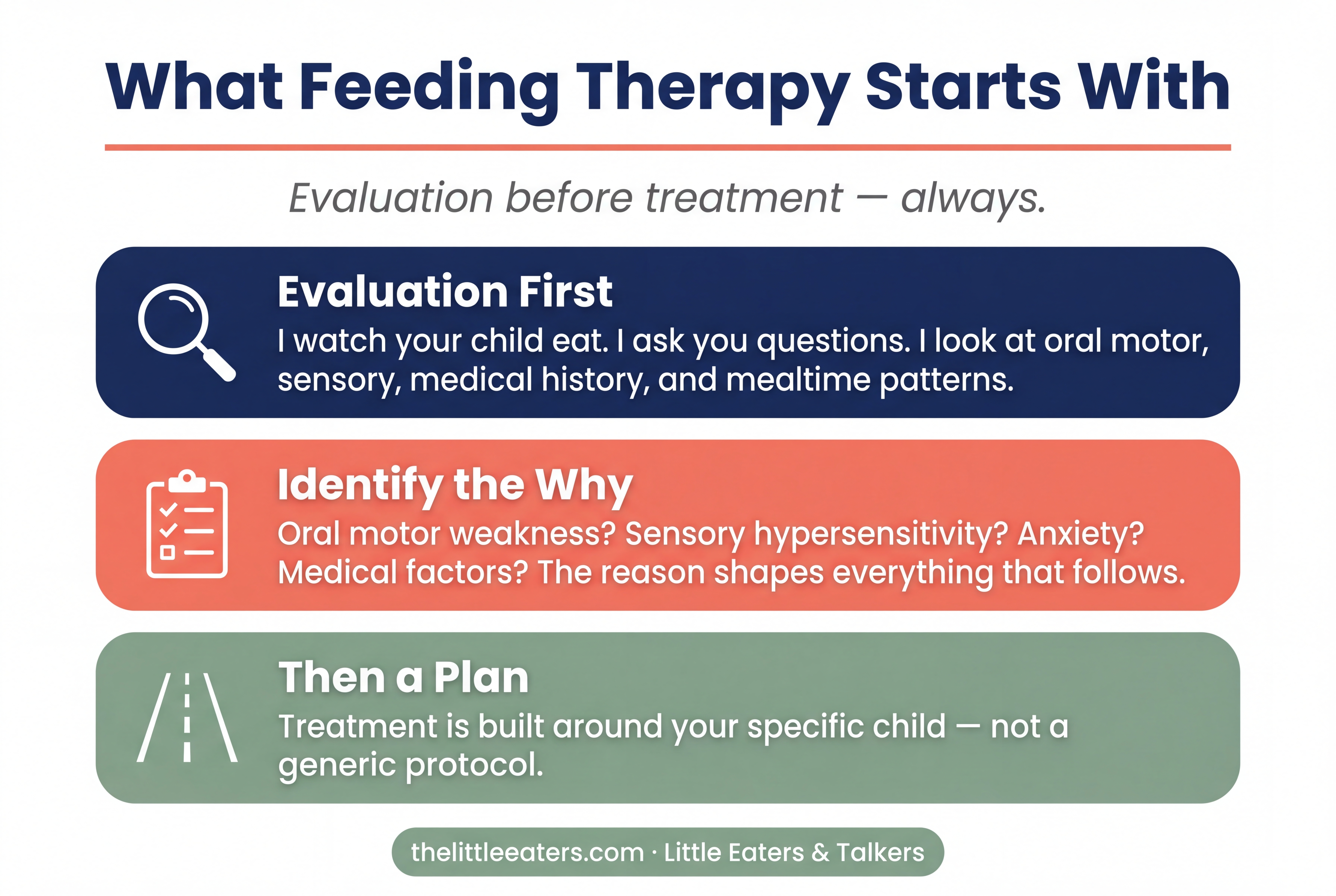
Feeding therapy starts with an evaluation, not a treatment plan.
Before I can help a child eat, I need to understand why they're struggling. The reasons vary enormously:
Oral motor weaknesses
Sensory hypersensitivity
Behavioral patterns built around past negative eating experiences
Medical factors like reflux, food allergies, or structural issues
Anxiety that has built up around mealtimes over time
What Happens in a Feeding Therapy Session
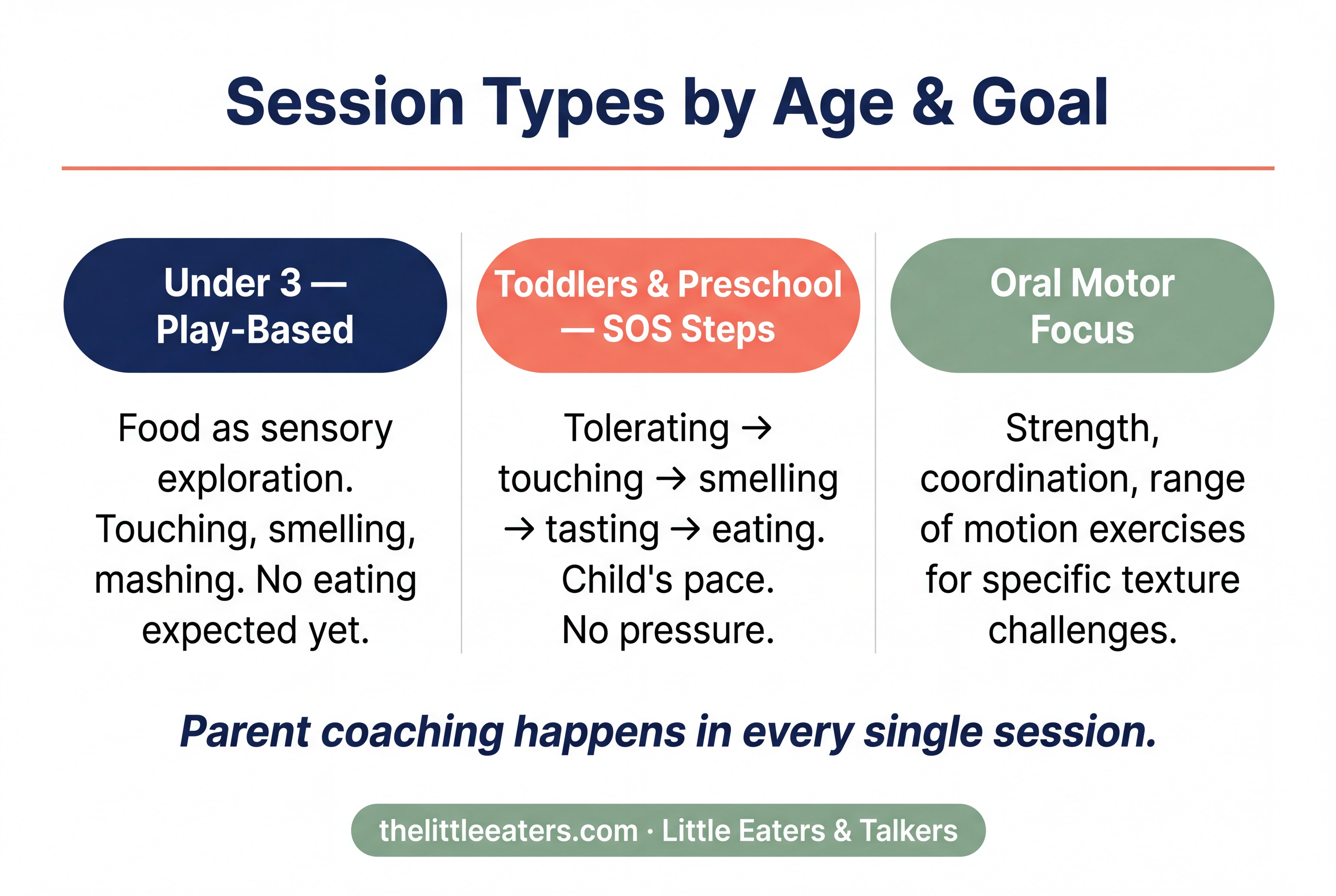
Sessions look different depending on the child's age, goals, and the approach being used.
For younger children (under 3):Sessions are largely play-based. We use food as a sensory exploration tool — touching, smelling, mashing, playing — long before any eating is expected.
For toddlers and preschoolers:We use the SOS (Sequential Oral Sensory) framework, which breaks down the sensory steps to eating: tolerating a food in the room → on the table → touching it → smelling it → touching to lips → tasting → eating. We move through these steps at the child's pace.
For children with oral motor challenges:Sessions focus on oral motor exercises — building the strength, coordination, and range of motion needed to manage specific textures.
Parent coaching happens in every session.What happens at home between sessions matters more than the 45 minutes in therapy.
How Long Does Feeding Therapy Take?
A child with mild sensory selectivity caught at 18 months may need 8–12 sessions. A 4-year-old with a 5-food repertoire and significant mealtime anxiety may need 6–12 months of consistent work.
Early intervention consistently leads to shorter, more effective treatment.
Download our free resources atthelittleeaters.com/FreeDownloadsto understand what might be driving your child's feeding challenges.
FAQ
Q: Does my child need a referral for feeding therapy?
In most cases, no. You can contact a feeding therapist directly. Some insurance plans require a physician referral for coverage.
Q: Will feeding therapy make my child "eat everything"?
The goal isn't a child who eats everything. The goal is a child with enough variety to meet nutritional needs, the ability to eat in social situations without significant distress, and a positive relationship with food.
Q: What's the difference between an SLP and an OT for feeding?
Both SLPs and OTs can specialize in feeding. SLPs typically focus on oral motor, swallowing, and the mouth mechanics of eating. OTs often focus on sensory processing and the behavioral aspects. Many specialists — including Jean — are trained across both areas.
Feeding therapy isn't about forcing a child to eat. It's about building the safety, skills, and sensory tolerance that make eating possible.
Book an evaluation →or call (832)304-3506.
Written by Jean Hawney, M.A., CCC-SLP | Little Eaters & Talkers, Bellaire TX |[email protected]