

Why Your Toddler Gags on Food (And When to Actually Worry)
Your toddler shoves a piece of banana in their mouth, makes a horrifying noise, and your heart stops.
That sound — the gagging, the retching, the face — is one of the scariest things parents witness at the table. And it happens often enough that I get asked about it constantly in my clinic.
Here's the honest answer: most toddler gagging is completely normal. But "most" isn't "all," and knowing the difference is important.
What the Gag Reflex Actually Is
The gag reflex is a protective mechanism. It's your child's body saying: this piece of food is too big, too far back, or something I'm not ready for — and I'm going to push it forward before it becomes a problem.
In infants and young toddlers, the gag reflex is positioned much further forward in the mouth than in adults. This is on purpose. It gives babies a much larger safety margin when they're learning to manage solid food. As your child gets older and gains more oral motor control, the gag reflex moves further back.
This is why a 7-month-old seems to gag constantly when starting solids — they're supposed to. That reflex is working.
Gagging vs. Choking: The Difference Matters
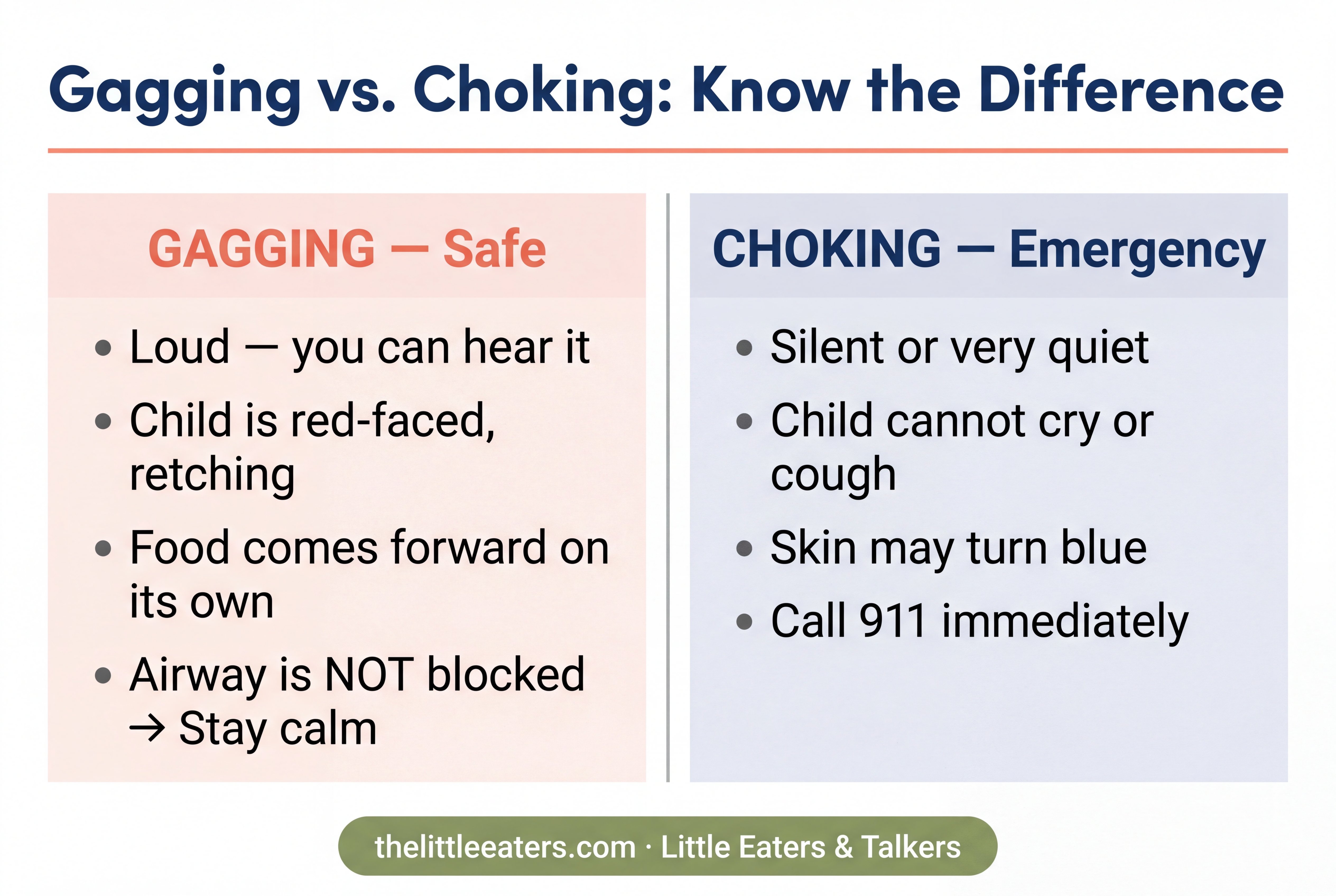
These two words get used interchangeably by parents, but they describe very different situations.
Gagging:
Loud — you can hear it
The child is red-faced, making noise, retching
Eyes may water
Food comes forward or the child recovers on their own
The airway is not blocked
Choking:
Silent or very quiet
The child cannot cry, cough, or make sound
Skin may turn blue or gray
Child looks panicked and cannot clear the obstruction themselves
This is an emergency
A gagging child does not need intervention — your job is to stay calm, resist grabbing food from their mouth, and let the reflex do its job. A choking child needs immediate back blows or the Heimlich maneuver.
Grabbing food from a gagging child's mouth is one of the most common mistakes parents make — and it can actually push the food further back.
Why Some Toddlers Gag More Than Others
Not all toddlers gag at the same rate. Several things can cause more frequent gagging:
Sensory sensitivity.Some children have a more sensitive gag reflex due to oral sensory processing differences. Certain textures — stringy, mixed texture, lumpy — trigger it more reliably.
Moving through textures too fast.When babies are pushed from purees to chunks before their oral motor skills are ready, the gag reflex kicks in often.
Eating too fast.Toddlers who eat quickly and take large bites gag more. It's a pacing issue, not a structural one.
Post-illness sensitivity.After a stomach bug or a bad choking scare, some children become hypersensitive and gag more easily for weeks.
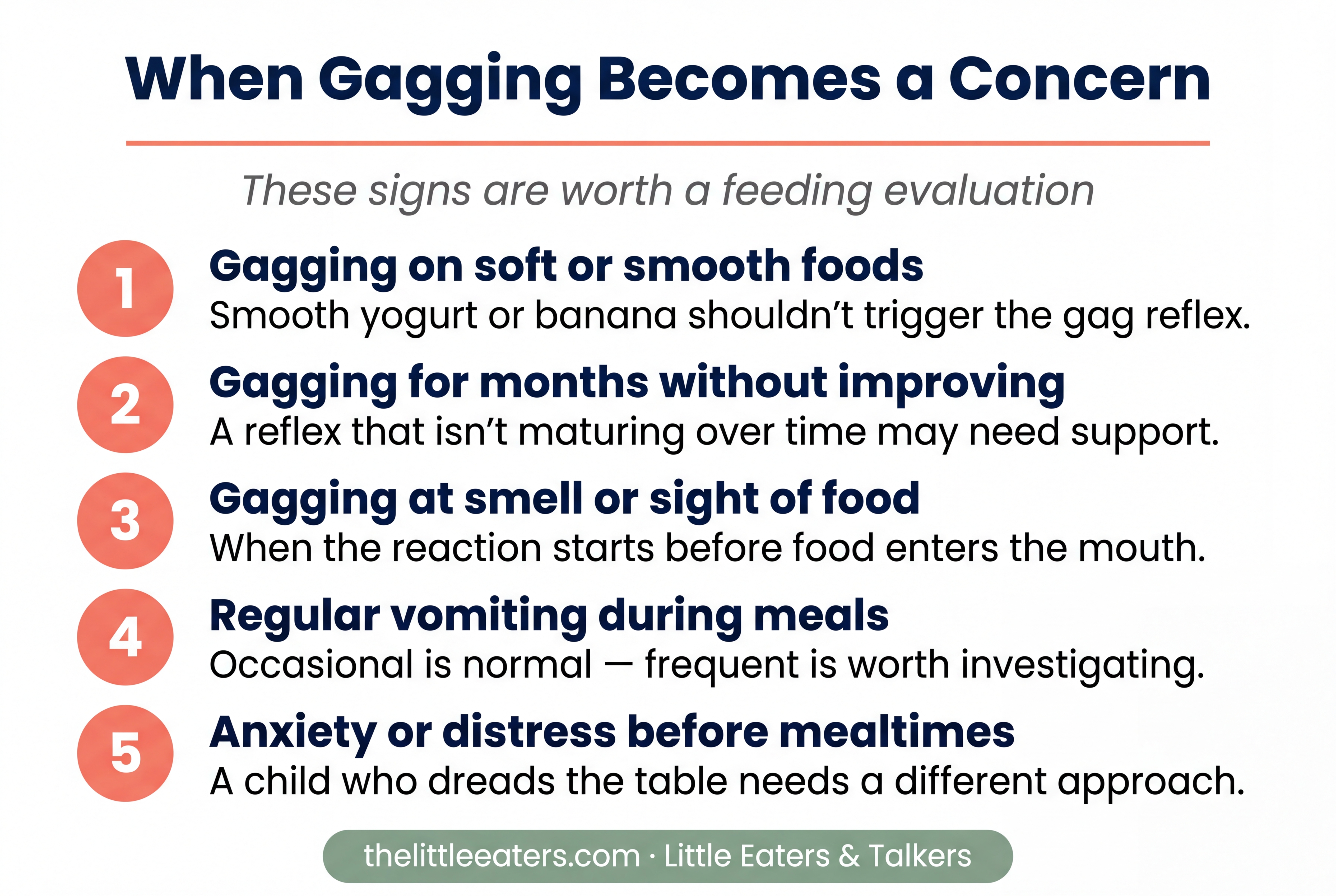
Consider reaching out for a feeding evaluation if your toddler:
Gags on foods that aren't a texture challenge (soft banana, yogurt)
Has been gagging for months without improvement
Gags at the smell or sight of food before it enters their mouth
Vomits regularly during or after meals
Is avoiding entire categories of food because of gagging
Shows anxiety or distress before meals
That last one — anxiety before meals — is a signal I take seriously.
What to Do at the Table When Your Toddler Gags
Stay calm.Your reaction teaches your child how to feel about gagging.
Don't pull food from their mouth.Let the reflex work.
Offer age-appropriate textures.Make sure you're not rushing texture progression. For guidance, check ourfree starting solids resources.
Offer small pieces.Pea-sized pieces for toddlers under 2.
Sit with them.Never leave a young child alone while eating.
FAQ
Q: Is it normal for a baby to gag every time they eat solids?
Frequent gagging is normal in the first weeks of introducing solids, especially between 6–9 months. If gagging continues daily past 10–12 months or is getting worse rather than better, it's worth a conversation with a feeding specialist.
Q: Should I stop giving my toddler the food they gag on?
Not necessarily. If the texture is appropriate for their age, continuing gentle exposure — without pressure — is usually the right approach. Removing foods in response to gagging can reinforce avoidance.
Q: My toddler gagged and vomited. Is that dangerous?
Occasional vomiting from gagging is not dangerous, but regular vomiting at meals warrants evaluation. It can indicate reflux, oral motor difficulties, or sensory issues that feeding therapy can address.
Q: How do I know if my child's gag reflex is hypersensitive?
Signs include gagging on smooth foods, gagging at smells, gagging before food reaches the mouth, or a history of oral aversion. A feeding therapist can assess this.
Gagging is scary. But most of the time, it means the system is working exactly as it should.
If something feels off, trust that feeling.Reach out →and we'll take a look together.
Written by Jean Hawney, M.A., CCC-SLP
Jean is a pediatric feeding specialist and speech-language pathologist at Little Eaters & Talkers in Bellaire, TX. She works with infants and toddlers to make mealtimes safer, calmer, and less stressful for the whole family.
Book a consultation →|(832)304-3506|[email protected]