
Why Wait and See Is the Worst Advice for Feeding and Speech Delays
"They'll grow out of it."
If I had a dollar for every time a parent came to me and said their pediatrician told them to wait and see — after months of feeding struggles, a shrinking food list, mealtime meltdowns every day — I'd have a lot of dollars.
I understand why physicians say it. Most developmental variation does resolve on its own. "Wait and see" is genuinely the right call for many concerns.
But not for feeding.
Why Feeding Is Different
Feeding skills can go backward. A child who gags frequently starts associating the table with discomfort. A child who is pushed to eat foods they're not ready for learns that eating is a battleground. A child with an accepted food list of 8 foods today can easily be at 5 foods six months from now — without any intervention — because avoidance is self-reinforcing.
What Actually Happens When You Wait
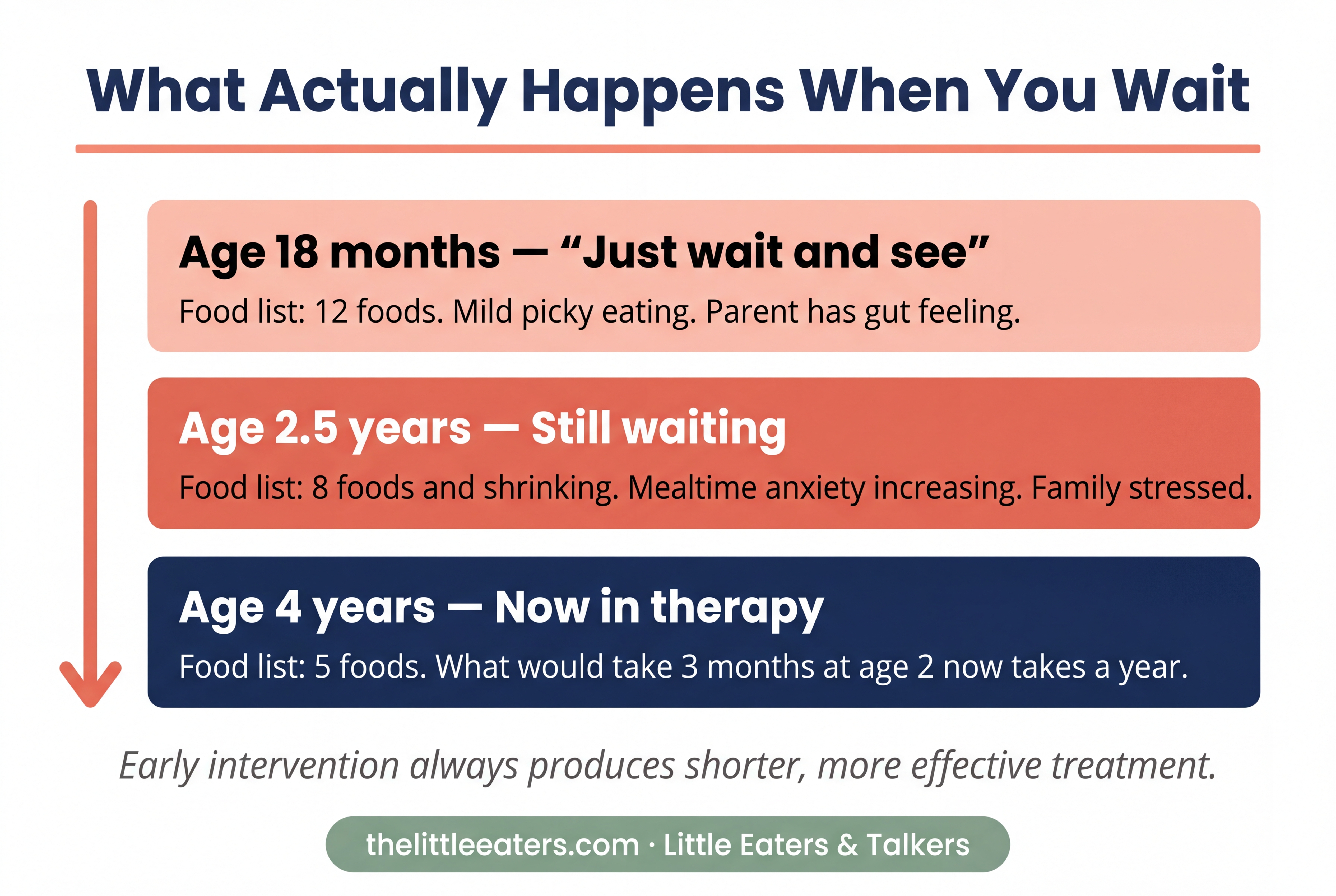
Here's what I see in families who waited.
The food list gets shorter. What started as "they're picky" becomes "they only eat 6 things." The child gets older, more cognitively aware, and more entrenched in their safe food patterns. What would have taken 3 months of feeding therapy at age 2 now takes a year at age 4.
Mealtime anxiety increases for the whole family. Parents are walking on eggshells. Siblings notice. Everyone's stressed. That stress itself becomes part of the feeding problem.
The nutritional gap grows.
The Window That Matters
The brain is most plastic in the first 3 years of life. This doesn't mean older children can't make progress in feeding therapy — they absolutely can. But the early years are genuinely easier.
Think of it like language. A child who gets speech therapy at 18 months for a delay typically needs far less intensive intervention than a child who begins at 4. The same principle applies to feeding.
When to Trust Your Gut Over the "Wait" Advice
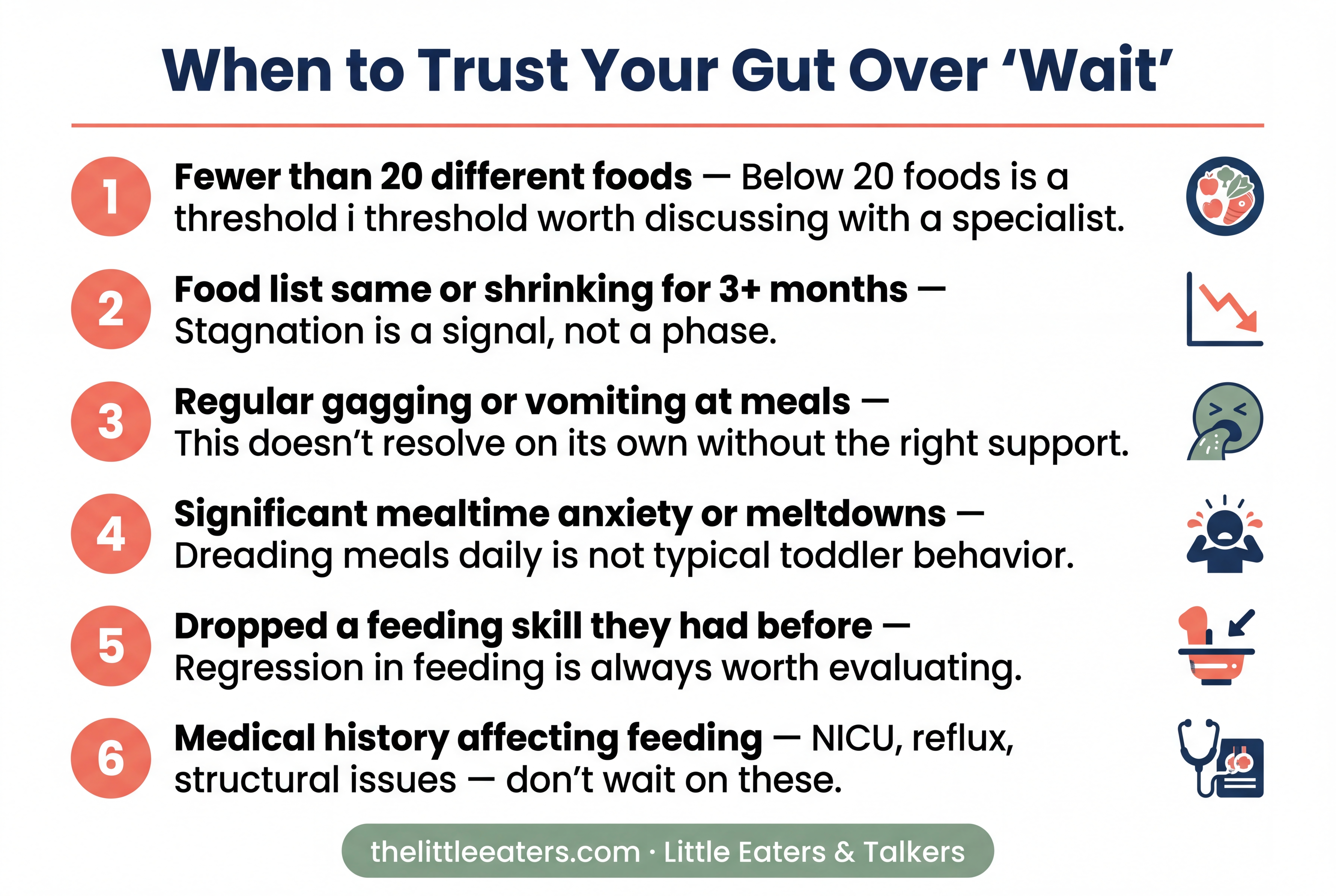
Your pediatrician has 15 minutes and a full waiting room. You spend every meal with your child. If something feels off, that information is real and worth acting on.
Consider seeking a feeding evaluation if your child:
Eats fewer than 20 different foods
Has a food list that has been the same or shrinking for 3+ months
Gags or vomits regularly at meals
Has significant mealtime anxiety or behavioral distress around food
Dropped a feeding skill they previously had
Has a medical history that affects feeding
What a Feeding Evaluation Actually Is
A feeding evaluation at Little Eaters & Talkers in Bellaire, TX is a conversation and an observation. I watch your child eat. I ask you questions. At the end, you have an answer — either reassurance with concrete strategies, or a clear picture of what's going on and what to do about it.
Most families leave saying they wish they'd come sooner.
Download our free resources atthelittleeaters.com/FreeDownloadsto start understanding what you're seeing at the table.
FAQ
Q: My pediatrician said my child is fine. Should I still seek an evaluation?
If you have a persistent gut feeling that something is off, a feeding evaluation can either confirm your concern or give you genuine reassurance. A feeding therapist has specialized training in areas that fall outside routine pediatric check-ins.
Q: How early is too early for feeding therapy?
There is no too early. Feeding therapy can begin in infancy for babies with bottle-feeding difficulties, NICU graduates, or structural issues.
Q: What if we wait and they do grow out of it?
That's genuinely possible, and a feeding evaluation can help determine whether a "wait and see with monitoring" approach is reasonable for your specific child.
You know your child. If something in your gut says this isn't just a phase — you're probably right.
Book an evaluation →or call (832)304-3506.
Written by Jean Hawney, M.A., CCC-SLP | Little Eaters & Talkers, Bellaire TX |[email protected]