

Why Your Toddler's Eating Gets Worse in Summer (And What Actually Helps)
You finally had a good routine going. Breakfast, lunch, snack — your toddler was eating. Then summer hit, and it's like starting from scratch.
They're refusing foods they used to eat. Mealtimes are longer and harder. And you're not sure if something is wrong or if this is just... summer.
Here's the truth: summer is genuinely one of the most disruptive seasons for toddler eating. And it's not your fault — and it's not theirs either.
Why Summer Changes Everything for Toddler Eating
Toddlers thrive on predictability. Their bodies and brains use routine as a cue for hunger, digestion, and readiness to eat. When summer arrives, almost everything that anchors that routine disappears — no school drop-off, no set schedule, later bedtimes, more stimulation, and hotter temperatures that genuinely suppress appetite.
Add sensory overload from pools, sunscreen, sand, and heat — and many kids who already have sensitive nervous systems simply shut down around food. It's not defiance. It's dysregulation.
Why Summer Disrupts Eating Routines
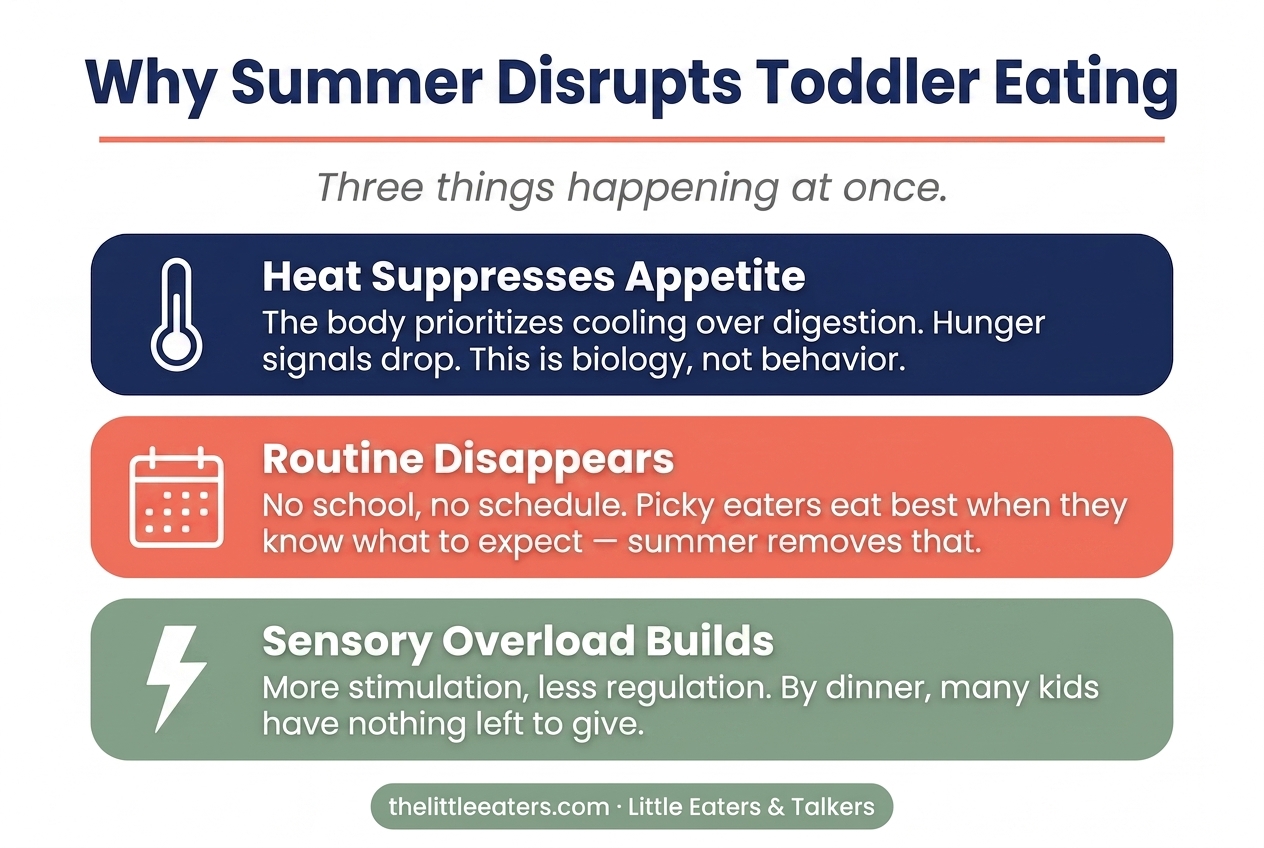
There are three main culprits when summer causes a toddler's eating to fall apart.
Routine disappears. Without a school schedule or consistent daily rhythm, hunger cues get scrambled. Toddlers don't know when to expect food — so their bodies stop sending clear signals.
Sensory overload is real. Heat, chlorine, sunscreen, sand — all of these are sensory inputs that pile up. For kids who already struggle with sensory processing, too much stimulation before a meal means they arrive at the table already maxed out. Eating is the last thing their nervous system wants to do.
Heat suppresses appetite. This is physiological, not behavioral. When the body is hot, appetite naturally decreases. Adults experience this too — we just don't panic about it. For toddlers with already limited eating, even a small appetite dip feels significant.
What Doesn't Help (Even Though It Feels Like It Should)
When a toddler stops eating, the instinct is to push harder. More offerings. More pressure. More "just one more bite."
The problem is that pressure backfires — especially in summer when their sensory system is already overloaded. Pressure increases anxiety around food, and anxiety makes eating harder, not easier. If your child is already sensitive around meals, summer pressure can create a real step backward.
Skipping meals entirely as a strategy ("they'll eat when they're hungry") also doesn't work well for toddlers with feeding challenges. They need structured opportunities to eat — even if the appetite isn't there — so their bodies can stay in a rhythm.
How to Help Your Toddler Eat in Summer
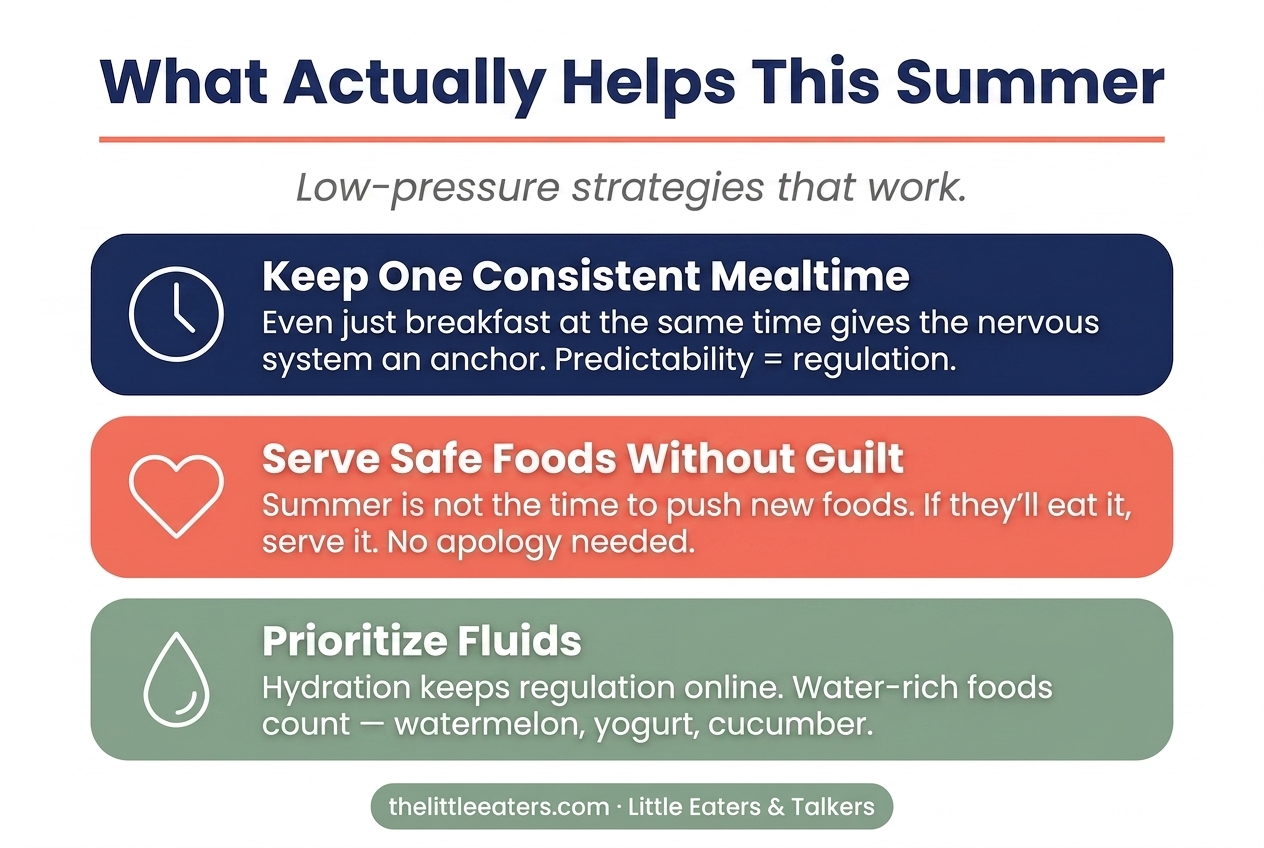
You can't control the heat or the chaos of summer. But there are a few things that genuinely help.
Keep meal times consistent. Even without school, anchor meals to a time of day. The body responds to clock-based cues. 8am breakfast, 12pm lunch, 5:30pm dinner — predictability helps hunger cues return.
Lean into cool, hydrating foods. Watermelon, cucumber, cold pasta, smoothies, yogurt pouches — these are easier to eat when it's hot. If your toddler is eating less volume, think about whether you can increase nutrition through what they do eat rather than how much.
Let connection lead, not pressure. Eat with them. Talk about the day. Keep the table low-stakes. A calm mealtime with less food eaten is better for a picky eater's long-term relationship with food than a tense mealtime where they eat more.
When to Be Concerned
Summer eating dips are normal — but there are a few signs worth paying attention to:
Your toddler is losing weight or falling off their growth curve
They've dropped to fewer than 10–15 foods total
Mealtimes have become daily battles with crying or gagging
The eating regression doesn't bounce back when school resumes
If any of these are happening, it's worth talking to a pediatric feeding therapist — not because something is terribly wrong, but because early support makes a real difference.
Frequently Asked Questions
Is it normal for toddlers to eat less in summer?
Yes — heat naturally suppresses appetite, and the loss of routine disrupts hunger cues. A temporary dip in eating during summer is very common, especially in toddlers.
Should I be worried if my toddler isn't eating much in the heat?
Watch for weight loss, significant food refusal, or increased mealtime distress. If any of those are present, it's worth a feeding evaluation. Otherwise, focus on consistency and keeping meals low-pressure.
How do I keep my picky eater eating during summer?
Maintain consistent meal times, offer familiar safe foods alongside new ones without pressure, and prioritize cool, hydrating options. The goal is to keep the routine — not to maximize the amount eaten.
Does summer heat cause feeding regression?
It can contribute to one — especially combined with schedule changes and sensory overload. Most children return to their baseline when routines resume in fall. Children with sensory feeding challenges may need more support to bounce back.
You Don't Have to Figure This Out Alone
Summer is hard. Feeding a toddler in summer is harder. If mealtimes have become something you dread — or if you're watching your child struggle and not sure what to do — that's exactly what we're here for.
The Little Eaters & Talkers team works with families in Bellaire, TX and the greater Houston area to make mealtimes easier. Book a consultation → let's figure out what's going on together.
And if you're not ready for that yet, start with our free resources at thelittleeaters.com/FreeDownloads — there's a lot there for summer eating specifically.
Written by The Little Eaters & Talkers Team — a group of pediatric feeding and speech specialists based in Bellaire, TX. We help infants and toddlers navigate feeding challenges, sensory food aversions, and speech development so mealtimes can feel easier for the whole family. Book a consultation →