

How to Introduce the Top 9 Allergens to Your Baby (Without the Fear)
How to Introduce the Top 9 Allergens to Your Baby (Without the Fear)
A few years ago, parents were told to hold off on allergenic foods until after the first birthday. New research has completely flipped that guidance.
We now know that early, consistent introduction of the top allergens is one of the best things you can do to reduce your baby's risk of developing a food allergy. But "introduce early" without knowing how is anxiety-inducing at best.
Here's exactly how to do it — one allergen at a time.
Why Early Introduction Matters
The landmark LEAP study showed that introducing peanuts before 12 months reduced peanut allergy risk by up to 80% in high-risk infants. Similar research now supports early introduction of all the major allergens.
The current guidance: introduce allergenic foods starting around 6 months, alongside other first foods, for most babies. Don't wait.
The exception: babies with severe eczema or an existing egg allergy should have allergen introduction supervised by an allergist before trying at home.
The Top 9 Allergens and How to Introduce Each One
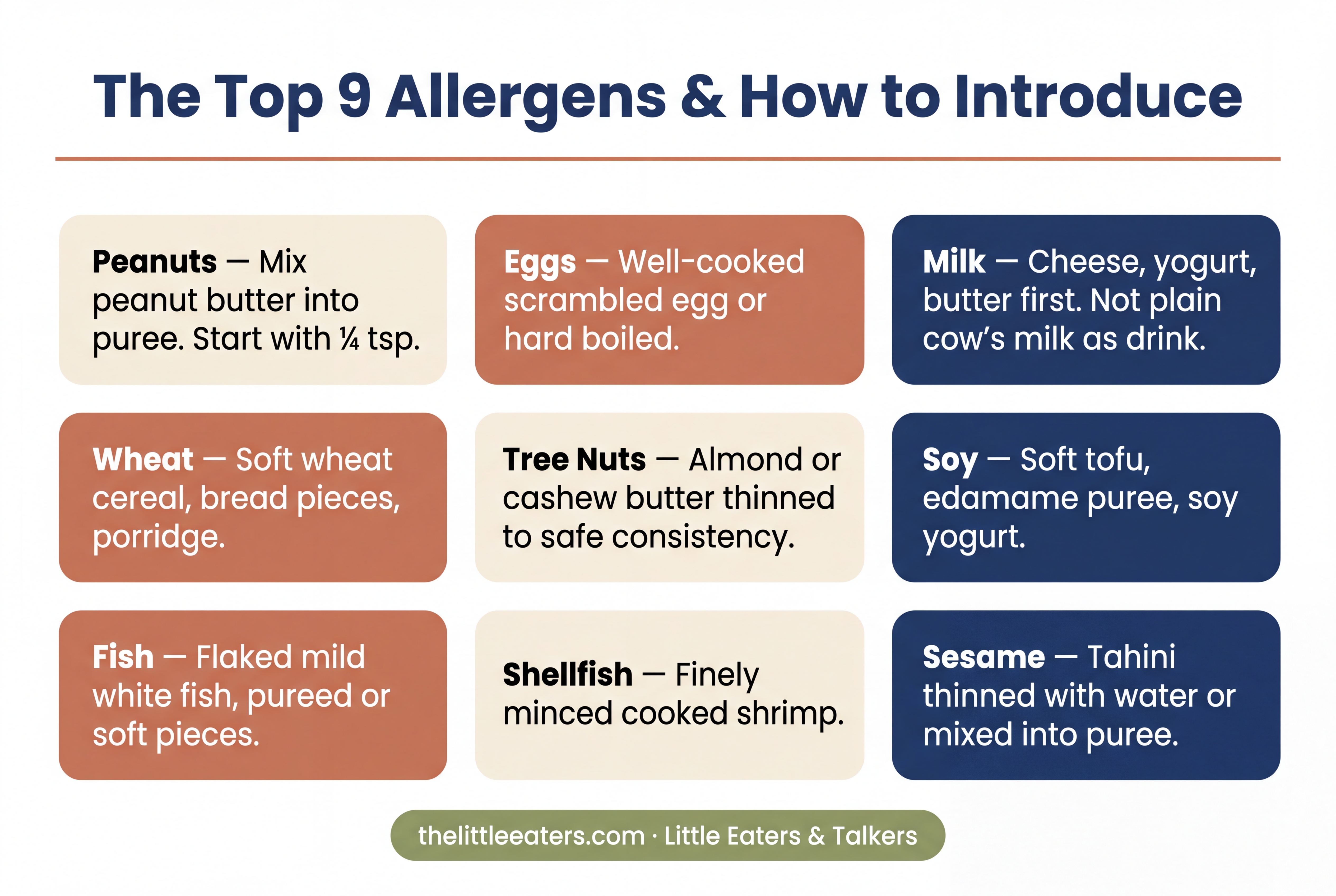
Peanuts— Mix smooth peanut butter into puree or oatmeal. Start with ¼ teaspoon. If no reaction after 2 hours, offer 2–3 times per week.
Eggs— Start with well-cooked egg (scrambled or hard-boiled). Introduce both yolk and white.
Milk— Cheese, yogurt, and butter are appropriate first introductions. Plain cow's milk as a drink is not recommended before 12 months.
Wheat— Soft wheat cereals, small pieces of bread, or wheat-containing porridge.
Tree Nuts— Ground nuts or nut butters thinned to a safe consistency. Almond and cashew butter work well.
Soy— Plain soft/silken tofu, edamame puree, or soy-based yogurt.
Fish— Flaked, well-cooked mild white fish (cod, tilapia, flounder) pureed or in small soft pieces.
Shellfish— Finely minced or pureed cooked shrimp.
Sesame— Tahini thinned with water or mixed into puree.
The Introduction Protocol
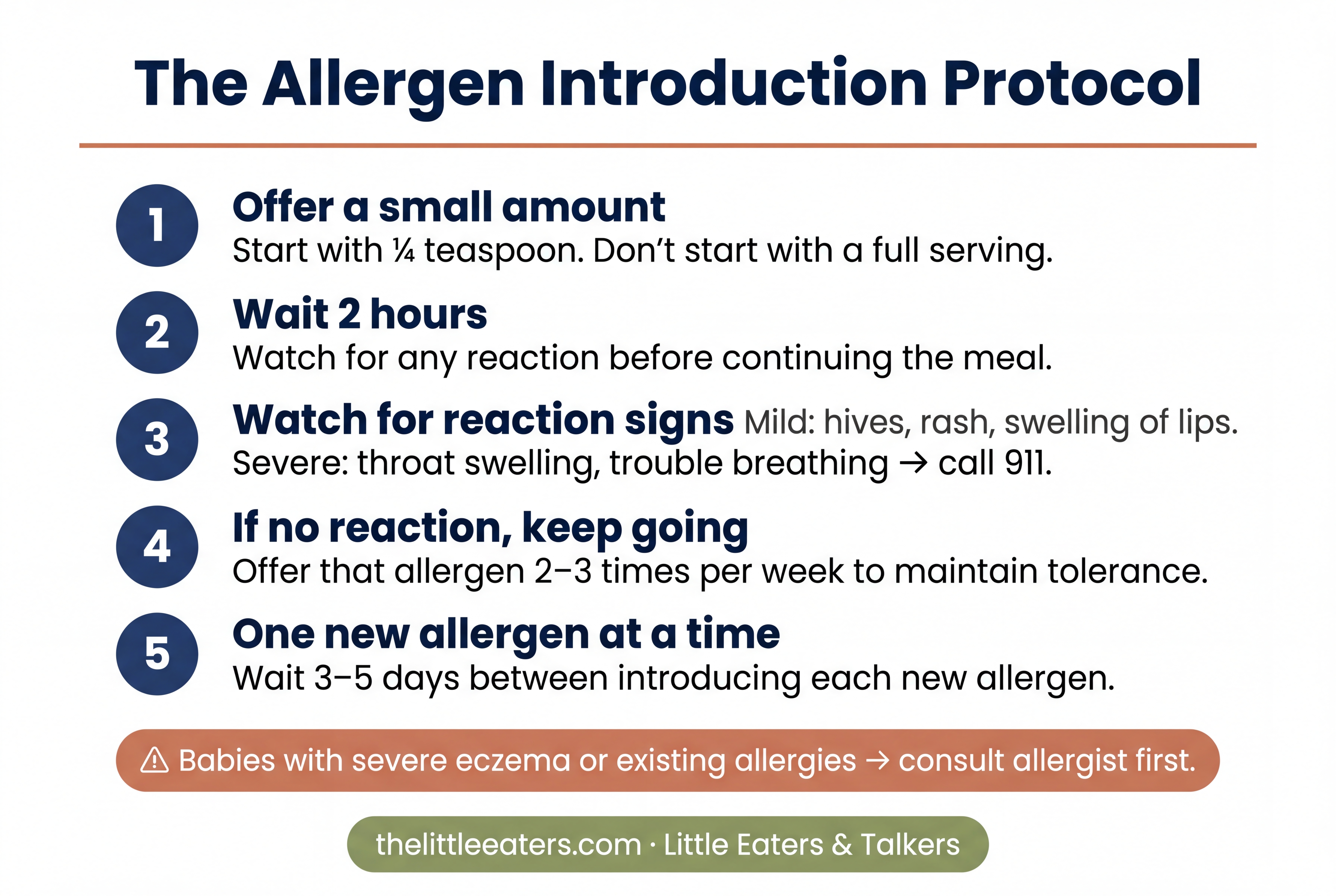
For each new allergen, follow these five steps:
Offer a small amount (¼ teaspoon to start)
Wait 2 hours before continuing the meal
Watch for signs of a reaction
If no reaction, continue offering 2–3 times per week
Introduce only one new allergen at a time, with 3–5 days between new introductions
This approach keeps exposure manageable and makes it easy to identify which food caused a reaction if one occurs.
What an Allergic Reaction Looks Like
Mild: hives, rash around the mouth, mild swelling of the lips, vomiting.
Severe (anaphylaxis):swelling of the throat, difficulty breathing, wheezing, sudden paleness —call 911 immediately.
If you see any signs of a severe reaction, do not wait. Stop the feeding and call emergency services.
Frequently Asked Questions
What if my baby reacts to a new food?
Mild reactions can be managed with Benadryl and a call to your pediatrician. If you see any breathing changes, throat swelling, or extreme paleness — call 911. After any reaction, consult your pediatrician before reintroducing that allergen.
Do I need an allergist present when I introduce allergens?
For most healthy babies without known risk factors, home introduction is appropriate. Babies with severe eczema or existing allergies should consult an allergist first.
Once I introduce an allergen with no reaction, am I done?
No. Consistent exposure is what builds tolerance. Continue offering that food 2–3 times per week — not just once and never again.
Can I introduce more than one allergen on the same day?
No. Introduce one at a time so you can clearly identify any reaction. Wait 3–5 days before adding a new allergen to the rotation.
What age should I start allergen introduction?
Most babies can begin around 6 months, alongside the start of solid foods. Talk to your pediatrician if your baby has risk factors like severe eczema.
Early allergen introduction is one of the most protective things you can do for your baby's long-term food relationship. The research is clear — don't let fear make you wait.
Also read: Baby-Led Weaning vs Purees — Which Is Right for Your Baby?
Written by Jean Hawney, M.A., CCC-SLP — Feeding Specialist & Speech-Language Pathologist at Little Eaters & Talkers, Bellaire TX. Jean works with infants and toddlers to make mealtimes safer and easier for the whole family. Book a consultation →